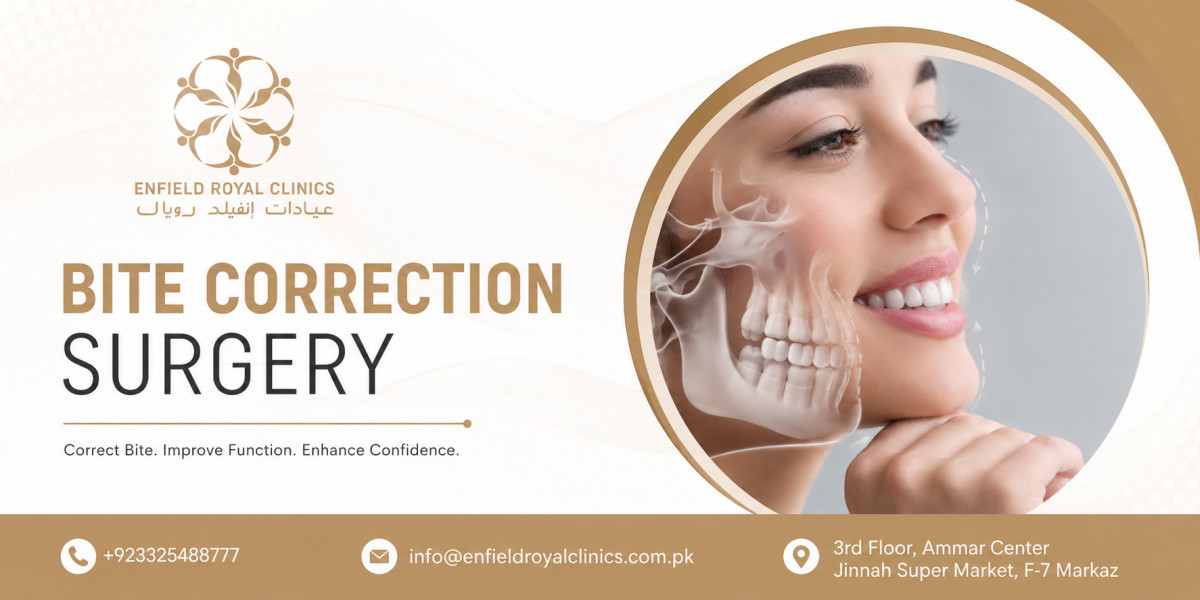

Chewing is one of the most important functions of the teeth and jaws. When the upper and lower teeth do not meet correctly, biting and chewing food can become less efficient or uncomfortable. Problems such as severe overbite, underbite, open bite, or jaw asymmetry may affect how chewing forces are distributed.
Bite Correction Surgery can help improve chewing in carefully selected patients when the underlying problem is caused by significant jaw misalignment. By repositioning the jaws and improving their relationship, surgery can create a more functional bite. However, the results depend on the original condition, treatment plan, and individual healing.
Why Does an Incorrect Bite Affect Chewing?
Efficient chewing depends on the upper and lower teeth meeting in a coordinated way. When the jaws or teeth are significantly misaligned, some teeth may contact too early while others may have little or no contact.
This can make it difficult to break down food effectively. Patients may also develop habits such as chewing predominantly on one side.
A severe bite problem may therefore affect more than appearance. It can influence everyday oral function and the way pressure is distributed across the teeth and jaws.
How Can Bite Correction Surgery Improve Chewing?
Bite Correction Surgery is designed to correct significant skeletal jaw discrepancies. During treatment, the surgeon repositions the affected jaw or jaws according to a carefully planned alignment.
When the upper and lower jaws are placed in a more appropriate relationship, the teeth can meet more effectively. This may allow chewing forces to be distributed more evenly and can improve the mechanical function of the bite.
The goal is not simply to make the teeth look straighter. The treatment aims to establish a functional relationship between the jaws and teeth.
Can It Help With a Severe Underbite?
A severe underbite can make it difficult for the front teeth to meet correctly. In some cases, the lower jaw is positioned significantly forward relative to the upper jaw.
When the underbite is primarily caused by skeletal jaw position, Bite Correction Surgery may help correct the underlying problem. Repositioning the jaw can create a more appropriate relationship between the upper and lower teeth.
This may improve the patient's ability to bite and chew food, although the degree of improvement varies between individuals.
Can It Help With an Overbite?
A significant overbite can also affect chewing function. If the upper teeth overlap the lower teeth excessively because of skeletal jaw differences, orthodontic treatment alone may not provide complete correction.
For selected patients, surgical jaw correction can improve the relationship between the upper and lower jaws. This may allow the teeth to work together more effectively during chewing.
Not every overbite requires surgery, so the underlying cause and severity must be evaluated first.
What About an Open Bite?
An open bite occurs when certain upper and lower teeth do not meet when the mouth is closed. This can make biting into some foods difficult.
When an open bite is caused by significant skeletal jaw differences, Bite Correction Surgery may be considered. By correcting the jaw relationship, treatment may allow more appropriate tooth contact.
Orthodontic treatment is often coordinated with surgery to refine tooth positions and improve the final bite.
Can Surgery Help Patients Who Chew on One Side?
Some people with significant bite problems develop a habit of chewing predominantly on one side because the teeth do not meet comfortably on both sides.
Correcting the underlying jaw alignment may help create a more balanced bite. However, chewing patterns can also be influenced by dental pain, missing teeth, muscle habits, or other factors.
For this reason, surgery should not be considered a guaranteed solution for one-sided chewing unless the problem is related to the jaw alignment.
Does Chewing Improve Immediately After Surgery?
Usually, no. Patients should not expect normal chewing immediately after Bite Correction Surgery.
During the early recovery period, swelling, stiffness, and healing restrictions can make chewing difficult. A soft or modified diet is often recommended while the jawbones heal.
As recovery progresses, patients can gradually return to more normal eating according to their surgeon's instructions.
How Long Does It Take to Adapt to the New Bite?
The time needed to adapt varies from patient to patient. After surgery, the position of the jaws has changed, so the muscles and brain may need time to become accustomed to the new bite.
The teeth may initially feel unfamiliar when they come together. Swelling and temporary changes in muscle movement can also affect chewing.
With healing and, when necessary, continued orthodontic treatment, patients can gradually become more comfortable with their new bite.
Can Orthodontics Also Improve Chewing?
Yes. Orthodontic treatment can improve chewing when the problem is primarily related to tooth position.
Braces and clear aligners can move teeth into better alignment, helping them contact more appropriately. However, orthodontics cannot reposition fully developed jawbones in the same way as corrective jaw surgery.
When a bite problem has both dental and skeletal components, orthodontics and surgery may be used together.
What Are the Potential Functional Benefits?
For an appropriately selected patient, correcting significant jaw misalignment may provide several functional benefits.
These can include:
- Improved bite contact
- More efficient chewing
- Better distribution of chewing forces
- Improved jaw alignment
- Easier biting into certain foods
- Better coordination between the teeth and jaws
- Improved overall oral function
The extent of improvement depends on the patient's original bite and other dental conditions.
Can Chewing Problems Have Other Causes?
Yes. Difficulty chewing does not always mean that a person needs Bite Correction Surgery.
Dental decay, missing teeth, gum problems, tooth sensitivity, jaw joint disorders, muscle problems, or poorly fitting dental restorations can also affect chewing.
A comprehensive dental examination is therefore important before deciding that jaw surgery is necessary.
How Is Chewing Function Evaluated?
Before treatment, the dental and surgical team may evaluate how the patient's teeth meet, how the jaws move, and whether chewing forces appear balanced.
Dental X-rays, digital scans, photographs, and other diagnostic tools can help identify the underlying bite problem.
After surgery, follow-up appointments allow the team to monitor bite stability and functional progress.
What Can Patients Expect Long Term?
Once healing is complete, appropriately selected patients may experience improved chewing function. However, the result depends on several factors, including the original jaw problem, dental health, orthodontic treatment, and individual healing.
Maintaining good oral hygiene and attending regular dental checkups remain important after treatment.
Final Thoughts
Can Bite Correction Surgery improve chewing? In suitable patients, it can. When inefficient chewing is caused by significant skeletal jaw misalignment, repositioning the jaws can create a more functional relationship between the upper and lower teeth.
However, surgery is not appropriate for every chewing problem. Dental conditions, tooth position, and other oral health issues should also be considered.
A professional evaluation can identify the cause of chewing difficulty and determine whether orthodontic treatment, Bite Correction Surgery, or another approach is most suitable.
For more information visit Enfield royal clinic in islamabad








