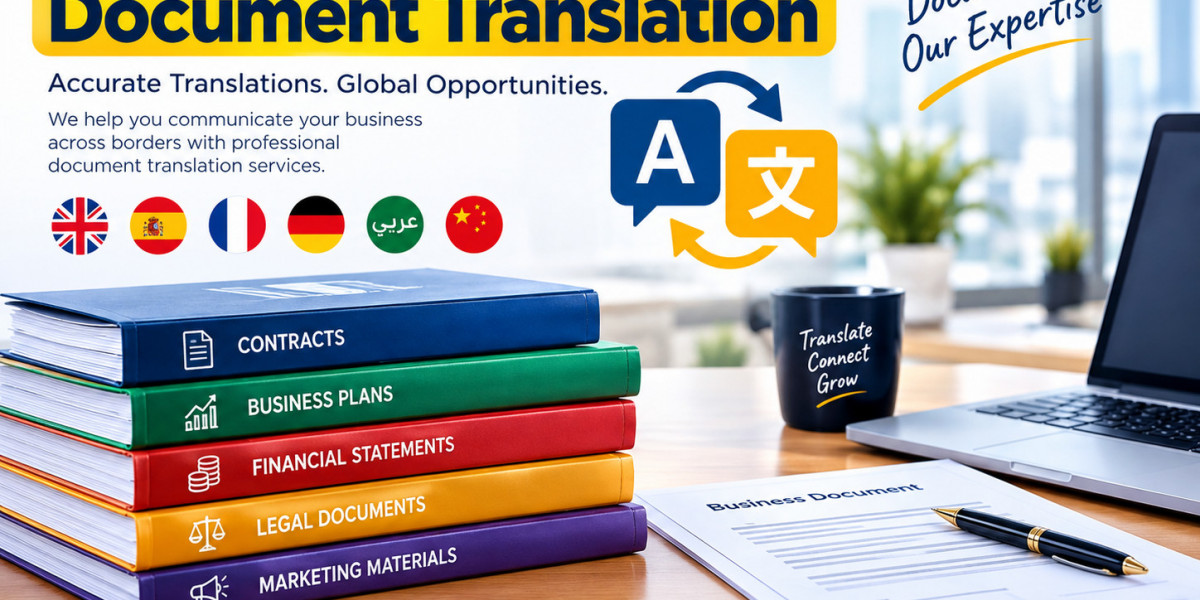

As businesses expand beyond their local markets, communication becomes one of the most important parts of building trust. A company may have an excellent product, experienced employees, and strong customer service, but international growth can become difficult when important information is not available in the language of the people who need it.
Business owners regularly work with contracts, invoices, proposals, financial records, employee documents, marketing materials, technical information, and corporate correspondence. When these documents cross language barriers, accuracy matters. A poorly translated sentence can create confusion, affect negotiations, or even lead to legal and financial problems.
Professional Translation Services can help businesses communicate clearly while maintaining the meaning, tone, and purpose of their original documents.
What Is Business Document Translation?
Business Document Translation is the process of converting professional or corporate documents from one language into another while preserving their original meaning and context.
Unlike casual translation, business documents often contain industry-specific terminology, legal language, financial information, company names, product details, and contractual obligations. The translator needs to understand the purpose of the document rather than simply translating individual words.
Common business documents that may require translation include:
- Business contracts
- Employment agreements
- Company policies
- Financial statements
- Invoices and purchase orders
- Business proposals
- Partnership agreements
- Corporate reports
- Product documentation
- Employee handbooks
- Marketing materials
- Business correspondence
- Certificates and corporate records
- Terms and conditions
The final translation should be clear, accurate, professional, and appropriate for its intended audience.
Why Accurate Business Translation Matters
Business communication often involves decisions that have real financial consequences. A contract, for example, may contain payment terms, responsibilities, deadlines, warranties, and termination conditions.
If these details are translated incorrectly, the parties involved may misunderstand their obligations.
Accuracy is equally important in financial documents. Numbers, currencies, percentages, dates, company names, and accounting terminology need to be handled carefully.
A reliable translation should communicate the same information as the source document without unnecessarily changing its meaning.
Maintaining Professional Tone and Brand Voice
Translation is not only about converting words between languages. Businesses also need to maintain their professional identity when communicating with international customers and partners.
For example, a technology company may want its documents to sound innovative and professional. A law firm may require formal and precise language. A healthcare company may need terminology that is appropriate for its industry.
The translator should consider:
- The target audience
- The company's industry
- The purpose of the document
- Cultural differences
- Formality level
- Industry terminology
- Brand voice
This helps ensure that the translated document feels natural rather than looking like a word-for-word conversion.
Documents That Frequently Require Professional Translation
Different industries have different documentation needs. Some businesses may require only occasional translation, while international companies may translate documents regularly.
Legal and Contract Documents
Contracts are among the most important documents businesses handle. They can include agreements between companies, employment contracts, licensing agreements, vendor contracts, and partnership documents.
Because legal language can be highly precise, these documents should be translated carefully. Terminology should remain consistent throughout the document.
Financial Documents
Financial paperwork may include income statements, balance sheets, invoices, tax-related documents, audit reports, and financial summaries.
A translation error involving a number, currency, or financial term can cause significant confusion. Careful review is therefore essential.
Human Resources Documents
International businesses may need to translate employee handbooks, workplace policies, offer letters, employment agreements, training materials, and benefits information.
Providing employees with important workplace information in a language they understand can improve communication and reduce misunderstandings.
Marketing and Sales Materials
Businesses entering new markets often translate brochures, product descriptions, presentations, advertisements, websites, and sales proposals.
Marketing translation requires special attention because literal wording does not always produce persuasive content in another language. Cultural preferences and local expressions can influence how a message is received.
The Difference Between General and Business Translation
General translation may involve everyday content such as personal correspondence, basic informational material, or simple website text.
Business Document Translation is more specialized because professional documents frequently contain industry-specific terminology and formal language.
For example, a translator working on a construction company's contract needs to understand relevant construction terminology. A financial report requires knowledge of accounting language. A technology agreement may contain technical terms that have specific meanings.
The translator's familiarity with the subject matter can therefore be just as important as language ability.
Benefits of Professional Translation for Growing Companies
Working with a professional provider can offer several advantages to businesses that communicate internationally.
Better Communication
Employees, customers, suppliers, and business partners can understand important information more easily when it is presented in their preferred language.
Fewer Misunderstandings
Clear translation reduces the risk of confusion surrounding agreements, policies, prices, deadlines, and responsibilities.
Stronger International Relationships
Providing professional documents in the appropriate language can demonstrate respect and professionalism to international partners.
Consistent Terminology
Businesses often use specific names for products, services, departments, and processes. A professional translator can maintain consistent terminology throughout multiple documents.
Improved Customer Experience
Customers are more likely to understand products, services, policies, and instructions when information is presented naturally in their language.
Greater Market Accessibility
Well-translated documents can make it easier for a company to enter new markets and communicate with potential customers.
How to Prepare Documents for Translation
Businesses can make the translation process smoother by preparing their documents before sending them to a translator.
Start with a final version of the document. Avoid making unnecessary changes while the translation is underway.
It is also helpful to identify:
- The source language
- The target language
- The intended audience
- The purpose of the document
- Industry-specific terminology
- Preferred formatting
- Deadlines
- Any certification requirements
If your company uses a glossary or preferred terminology, provide it to the translator. This can help maintain consistency across documents.
What Makes a Quality Business Translation?
A high-quality translation should be accurate, readable, consistent, and appropriate for its intended audience.
Several factors contribute to quality:
Accuracy: The translated content should faithfully represent the source.
Clarity: Readers should be able to understand the information without struggling with awkward wording.
Consistency: Important terms should be translated consistently throughout the document.
Context: Words should be translated according to their meaning within the document, not simply according to a dictionary definition.
Formatting: Tables, headings, numbers, signatures, and other important elements should be presented appropriately.
Review: Important documents should be carefully checked for grammar, terminology, numbers, names, and formatting.
Human Translation vs. Automated Tools
Technology has made translation faster and more accessible. Automated tools can be useful for understanding the general meaning of simple text, but businesses should be cautious when dealing with important documents.
Automated systems may struggle with context, specialized terminology, legal wording, cultural nuances, and ambiguous phrases.
For contracts, financial records, corporate agreements, and other important documentation, professional human review can provide an additional level of accuracy and reliability.
Technology can support the translation process, but important business communication should not depend entirely on automated output without appropriate review.
How to Choose a Translation Provider
Choosing a translation provider should involve more than comparing prices.
Consider whether the provider has experience with your industry and the type of documents you need translated.
Before hiring a provider, ask about:
- Experience with business documents
- Languages offered
- Industry expertise
- Quality-control procedures
- Confidentiality practices
- Formatting capabilities
- Certification options
- Turnaround times
- Revision policies
You should also explain exactly how the translated documents will be used. A document intended for internal communication may have different requirements from one being submitted to a government agency or court.
Protecting Confidential Business Information
Business documents can contain sensitive information such as financial data, customer information, employee details, pricing, intellectual property, and proprietary business strategies.
Before sharing documents, businesses should understand how their information will be handled.
Ask the provider about confidentiality procedures, document storage, access controls, and whether files are deleted after completion.
For highly sensitive documents, companies may also consider using confidentiality agreements when appropriate.
Frequently Asked Questions
1. What are Translation Services for businesses?
Translation Services help companies convert business content from one language into another while preserving its meaning, terminology, and professional tone. They may cover contracts, financial records, employee documents, marketing materials, and other corporate content.
2. What is Business Document Translation?
Business Document Translation involves translating professional documents such as contracts, reports, invoices, proposals, policies, and corporate records into another language while maintaining their original meaning and formatting.
3. Can business contracts be translated?
Yes. Business contracts can be translated for international partners, employees, suppliers, customers, and other parties. Because contracts may have legal implications, accuracy and appropriate terminology are particularly important.
4. Should financial documents be professionally translated?
For important financial documents, professional translation is generally recommended. Financial records can contain specialized terminology, numbers, currencies, and information where mistakes may have serious consequences.
5. Can a business translate its documents using online software?
Online translation tools may be useful for getting a general understanding of basic text. However, important business documents should be reviewed by a qualified professional, especially when they contain legal, financial, technical, or confidential information.
6. How long does business document translation take?
Turnaround time depends on the document's length, language combination, complexity, formatting, and required review. Short documents may be completed relatively quickly, while lengthy or highly technical documents can require more time.
7. Is business translation different from regular translation?
Yes. Business documents often require specialized terminology, formal language, consistent formatting, and an understanding of the industry involved.
8. Can translated business documents be certified?
In some situations, certified translation may be available or required. Whether certification is necessary depends on the organization receiving the document and how the translation will be used.
9. What languages can business documents be translated into?
The available languages depend on the translation provider. Many professional providers support widely used languages as well as less common language combinations.
10. What should I provide when requesting a translation?
Provide the complete document, identify the target language, explain how the document will be used, and mention any formatting, certification, or deadline requirements. Providing this information upfront can help the translator determine the appropriate process.
Final Thoughts
International business depends on clear communication. As companies work with customers, suppliers, employees, and partners across different countries, accurately translated documentation becomes increasingly valuable.
From contracts and financial records to employee policies and marketing materials, every document represents the professionalism of a company. Poorly translated content can create confusion, while carefully prepared documents can help build confidence and strengthen international relationships.
Professional Translation Services give businesses a practical way to communicate across language barriers while preserving the meaning and purpose of their original content.
Whether you are entering a new market, working with an overseas partner, hiring international employees, or preparing corporate documents for an international organization, investing in accurate Business Document Translation can help your company communicate with greater clarity and confidence.









