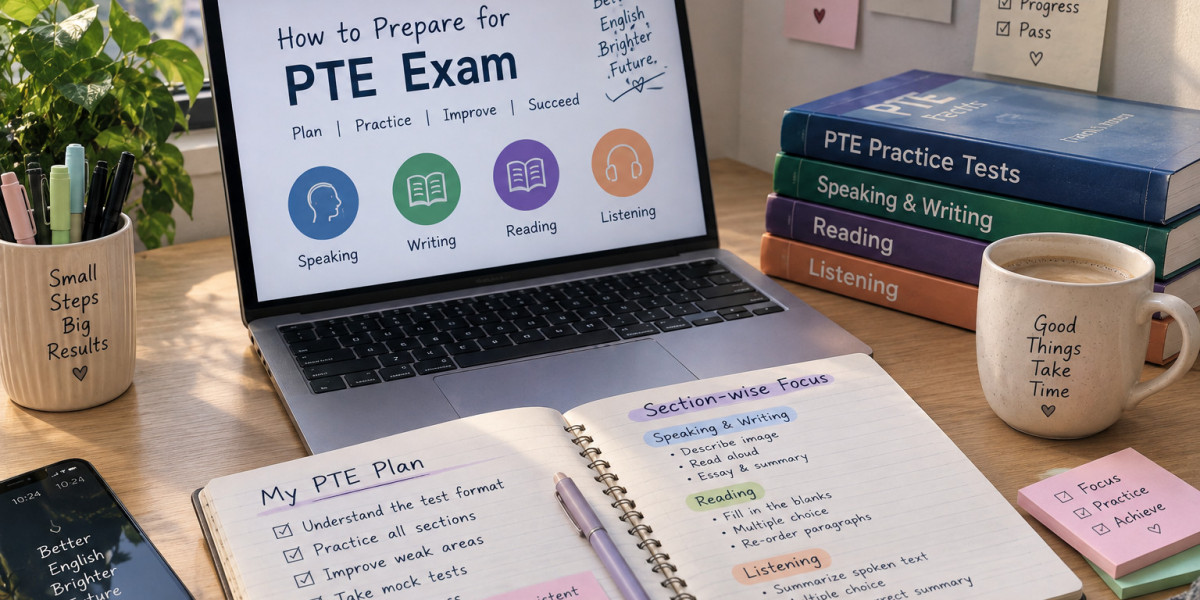

How to Prepare for PTE Test A Practical Study Guide
Understand the PTE Test Format
First, learn the complete PTE Academic test format. The exam includes Speaking, Writing, Reading, and Listening sections. Therefore, understand each question type before starting serious practice.
This approach helps you manage time and avoid unnecessary mistakes.
Create a PTE Study Plan
Next, create a realistic study schedule based on your available time. Set daily goals for each PTE section. For example, practice speaking in the morning and reading later.Meanwhile, use evenings for listening and writing exercises. Consistency matters more than studying for long hours occasionally.
Improve Your PTE Speaking Skills
Speaking requires clear pronunciation, fluency, and confident delivery. Therefore, practice Read Aloud, Repeat Sentence, and Describe Image regularly. Record your responses and review your pronunciation afterward. Also, avoid unnecessary pauses and repeated words during your answers. Furthermore, focus on speaking naturally instead of memorizing complete responses.
Strengthen Your PTE Writing Skills
For writing, practice Summarize Written Text and Write Essay tasks. Always understand the question before writing your response. Moreover, organize essays with a clear introduction, body, and conclusion. Use simple vocabulary correctly instead of forcing complicated words. Finally, check grammar, spelling, punctuation, and sentence structure carefully.
Build Strong PTE Reading Skills
Reading requires speed, accuracy, and strong vocabulary. Start by practicing Fill in the Blanks and Reorder Paragraphs. Then, work on multiple-choice questions and reading comprehension tasks.
Learn common academic words and understand their meanings in context. Additionally, avoid spending too much time on difficult questions.
Develop Better PTE Listening Skills
Listening practice can significantly improve your understanding and response accuracy. Listen to English podcasts, lectures, interviews, and educational videos. Meanwhile, practice Summarize Spoken Text and Write From Dictation. Take brief notes while listening to important information. Also, pay attention to keywords, numbers, names, and specific details.
Practice With PTE Mock Tests
Mock tests help you understand your current preparation level. Therefore, complete full-length tests under realistic exam conditions. Use a timer and avoid unnecessary breaks during practice. After each test, review your mistakes carefully. Most importantly, identify repeated errors and work on them consistently.
Use Reliable PTE Preparation Resources
Choose study materials that match the current PTE test format. Avoid relying on outdated questions or questionable preparation techniques.
A structured PTE Preparation Course Online can support regular PTE practice and help learners focus on different question types. A good course can also provide a clear study routine and organized practice materials.
Manage Your PTE Exam Time
Time management plays an important role during the actual test. Therefore, practice answering questions within their expected time limits. Do not spend too long trying to perfect one answer.
Instead, stay focused and move forward when necessary.
Track Your PTE Progress
Keep a simple record of your practice scores and mistakes. Then, compare your performance every week. This method shows which skills need additional attention. Consequently, you can adjust your study plan more effectively.
Practice PTE Vocabulary Daily
Build your vocabulary by learning useful academic and everyday English words. Write new words in a notebook and review them regularly. Additionally, practice using each word in a complete sentence.
Work on Your English Pronunciation
Clear pronunciation helps you communicate your ideas effectively during speaking tasks. Therefore, practice difficult sounds and common English words daily. You can also record your voice and compare your pronunciation.
Learn From Your PTE Mistakes
Review every mistake after completing a practice session. Identify whether the problem involves grammar, vocabulary, timing, or understanding. Then, practice similar questions until you improve.
Avoid Memorizing Every Answer
Templates can help organize your responses during certain PTE tasks. However, avoid memorizing complete answers without understanding the question. Instead, learn useful structures and adapt them naturally.
Stay Calm During the PTE Exam
Exam pressure can affect your concentration and performance. Therefore, stay calm when you encounter a difficult question. Take a moment, follow your strategy, and continue with confidence.
Stay Consistent Before the Exam
Finally, maintain your practice routine until exam day. Avoid completely changing your preparation strategy at the last moment. Instead, revise common mistakes and complete targeted practice sessions. Also, get enough rest before your PTE test.
With consistent preparation, focused practice, and effective time management, you can approach the exam confidently.









