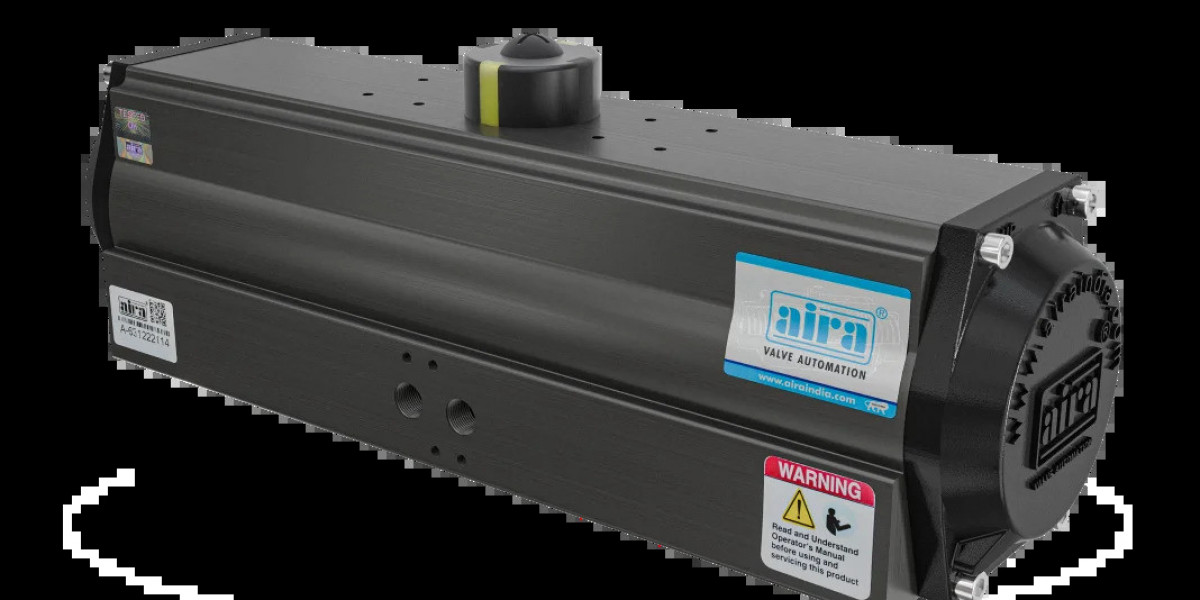

Industrial automation has become an essential part of modern manufacturing and processing systems. To improve efficiency, accuracy, and safety, industries rely on advanced automation components such as pneumatic rotary actuators. These devices help control valves automatically by converting compressed air energy into rotary movement.
A pneumatic rotary actuator is widely used in industries where precise valve operation is required. From controlling fluid flow to improving process efficiency, these actuators provide reliable performance in various applications. Aira Euro Automation Pvt Ltd provides advanced automation solutions designed to meet different industrial requirements.
What Is a Pneumatic Rotary Actuator?
A pneumatic rotary actuator is a mechanical device that converts compressed air pressure into rotational motion. This rotary movement is used to operate quarter-turn valves such as ball valves and butterfly valves.
Unlike manual valve operation, pneumatic actuators allow automatic control, which helps industries improve productivity and reduce human effort. These actuators are commonly used in industries such as chemical processing, water treatment, pharmaceuticals, food processing, and manufacturing.
The main purpose of a pneumatic rotary actuator is to provide controlled and consistent valve movement. Depending on the application requirements, actuators are available in different rotation angles, torque capacities, and designs.
How Does a Pneumatic Rotary Actuator Work?
A pneumatic rotary actuator works by using compressed air supplied through an air connection. When air enters the actuator chamber, it creates pressure that moves internal components such as pistons or vanes. This movement is converted into rotary motion, which operates the connected valve.
The actuator can either open or close the valve depending on the direction of air supply. In a double-acting actuator, compressed air controls both opening and closing movements. In a spring-return actuator, compressed air opens the valve while springs return it to its original position when air pressure is removed.
This simple yet effective mechanism makes pneumatic rotary actuators suitable for applications that require fast and reliable valve control.
Key Features of Pneumatic Rotary Actuators
1. High Operating Efficiency
Pneumatic rotary actuators provide quick response and smooth operation. They allow valves to open and close faster compared with manual systems, improving overall process efficiency.
2. Compact and Durable Design
These actuators are designed to operate in demanding industrial environments. Their compact construction makes installation easier, while durable materials help ensure long service life.
3. Reliable Torque Performance
A pneumatic rotary actuator delivers consistent torque output, allowing it to operate different types and sizes of valves effectively.
4. Easy Maintenance
Compared with complex automation systems, pneumatic actuators require less maintenance. Regular inspection and proper air quality management can significantly improve their performance and lifespan.
5. Safe Operation
Since pneumatic systems use compressed air instead of electrical power, they are suitable for applications where safety is a major concern.
Types of Pneumatic Rotary Actuators
90 Degree Pneumatic Rotary Actuator
A 90 degree pneumatic rotary actuator is commonly used for quarter-turn valve applications. It provides a 90-degree rotation required for operating valves such as ball valves and butterfly valves.
These actuators are widely preferred because they offer quick operation, accurate control, and reliable performance. They are commonly installed with automated valve systems where fast opening and closing cycles are required.
180 Degree Pneumatic Rotary Actuator
A 180 degree pneumatic rotary actuator provides a wider rotation range compared with standard quarter-turn actuators. It is suitable for applications where equipment requires extended rotary movement.
These actuators are useful in specialised automation systems where greater rotational flexibility is needed. They help achieve better control in applications involving rotary mechanisms.
Applications of Pneumatic Rotary Actuators
Pneumatic rotary actuators are used across multiple industries due to their reliability and flexibility.
Common applications include:
Automated valve control systems
Water and wastewater treatment plants
Chemical processing units
Food and beverage industries
Pharmaceutical manufacturing
Oil and gas applications
Industrial pipeline systems
They are mainly used with valves where automatic flow control is required.
Pneumatic Actuator Applications with Ball Valves and Butterfly Valves
A 90 degree pneumatic rotary actuator pneumatic ball valve combination is widely used in industrial systems that require quick and accurate flow control. Ball valves connected with pneumatic actuators provide reliable operation and can be controlled remotely through automation systems.
Similarly, a pneumatic actuated ball valve butterfly valve setup helps industries manage fluid and gas flow efficiently. These systems reduce manual intervention and improve operational safety.
A pneumatic butterfly valve is especially useful for large pipeline applications because it requires less space and provides effective flow regulation. When combined with a pneumatic actuator, it offers faster operation and improved control.
Maintenance Tips for Pneumatic Rotary Actuators
Proper maintenance helps extend the working life of pneumatic rotary actuators and prevents unexpected downtime.
Check Compressed Air Quality
Clean and dry air is essential for smooth actuator operation. Moisture and contaminants can damage internal components.
Inspect Seals and Connections
Regularly check seals, fittings, and air connections to prevent leakage and maintain efficiency.
Monitor Performance
Pay attention to unusual noise, slow movement, or reduced torque output. Early detection can prevent major problems.
Keep Components Clean
Dust and external contaminants should be removed regularly to maintain reliable performance.
Follow Regular Servicing
Scheduled maintenance ensures that all actuator parts remain in good working condition.
Conclusion
A pneumatic rotary actuator is an important component in industrial automation systems, providing reliable and efficient valve control. With benefits such as fast operation, durability, and easy maintenance, these actuators are widely used across different industries.
Understanding actuator types, applications, and maintenance requirements helps you select the right solution for your automation needs. Whether you require a 90 degree pneumatic rotary actuator, 180 degree pneumatic rotary actuator, or automated valve system, choosing the correct equipment ensures better performance and long-term reliability.
Aira Euro Automation Pvt Ltd focuses on delivering dependable pneumatic automation solutions that support modern industrial operations with improved efficiency and control.