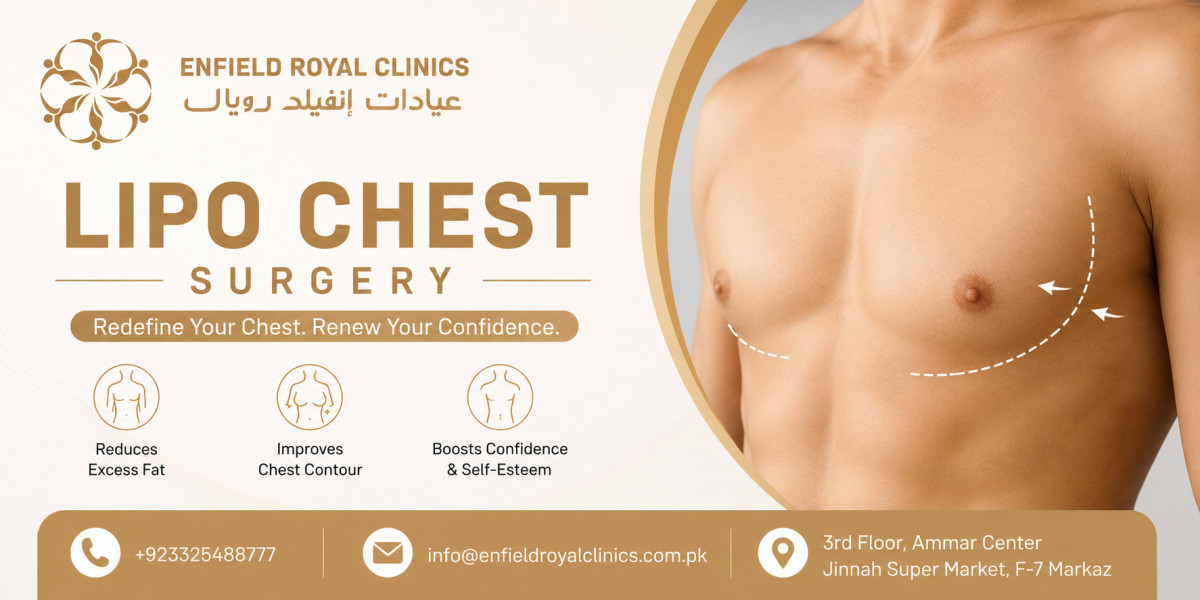

Gynecomastia is a common concern among men and can cause the chest to appear fuller or more prominent. It may affect confidence, clothing choices, and body image. Because excess fat can contribute to a larger male chest, many people wonder whether Lipo Chest Surgery can treat gynecomastia.
The answer depends on what is causing the chest enlargement. Liposuction can be effective when excess fatty tissue is a significant part of the problem. However, gynecomastia can also involve firm glandular tissue, which may require a different surgical approach.
What Is Gynecomastia?
Gynecomastia refers to the enlargement of male breast tissue. It can develop for different reasons and may involve glandular tissue, fatty tissue, or a combination of both.
The condition can affect one or both sides of the chest. Some men notice a soft, fatty appearance, while others may feel a firmer area beneath the nipple.
Because the underlying tissue varies between individuals, identifying the cause is an important first step before choosing treatment.
How Does Lipo Chest Surgery Help?
Lipo Chest Surgery is a form of targeted liposuction designed to remove unwanted fat from the chest. If a patient's chest enlargement is primarily caused by excess fatty tissue, liposuction may significantly improve the appearance.
During the procedure, a surgeon uses a thin cannula to remove localized fat through small incisions. The fat is removed carefully to create a flatter and more balanced chest contour.
Liposuction does not directly remove dense glandular breast tissue. This distinction is important when determining whether liposuction alone is suitable.
Can Liposuction Treat Fat-Dominant Gynecomastia?
In some cases, yes. Men with gynecomastia that has a substantial fatty component may benefit from Lipo Chest Surgery.
This can be particularly useful when the chest has a soft appearance and the main concern is excess fat rather than firm tissue beneath the nipple.
The surgeon evaluates the chest during consultation to determine how much of the enlargement is caused by fat. If fat is the primary contributor, liposuction may provide noticeable improvement.
When Is Glandular Tissue Removal Needed?
If gynecomastia involves significant glandular tissue, liposuction alone may not fully correct the chest.
Glandular tissue is typically firmer and may sit beneath the nipple or areola. Because liposuction is designed primarily to remove fatty tissue, surgical excision may be necessary when firm glandular tissue is prominent.
In some patients, the surgeon may combine Lipo Chest Surgery with glandular tissue removal. This approach allows both fat and excess tissue to be addressed when appropriate.
Can Lipo Chest Surgery and Gland Removal Be Combined?
Yes, depending on the individual's anatomy and treatment goals. A combined approach can be useful when both excess fat and glandular tissue contribute to chest enlargement.
Liposuction can help contour the surrounding fatty tissue, while surgical excision can address firm glandular tissue.
The combination may create a more balanced chest shape than either technique alone in appropriately selected patients.
The exact treatment plan should always be determined after an individual assessment.
Who May Be a Candidate?
A suitable candidate for Lipo Chest Surgery may be a healthy adult man with stable weight and noticeable excess fatty tissue around the chest.
Candidates should have realistic expectations and understand that treatment is intended to improve contour rather than guarantee a perfectly sculpted chest.
If gynecomastia is suspected, the surgeon should assess whether the enlargement is primarily fatty, glandular, or a combination of both before recommending treatment.
What Happens During Treatment?
The procedure begins with an assessment and treatment planning. The surgeon identifies the areas requiring fat removal and determines the most appropriate technique.
During Lipo Chest Surgery, small incisions are made in discreet locations. A cannula is then used to remove unwanted fat from the chest.
If glandular tissue also needs to be removed, an additional surgical step may be performed. The specific technique depends on the patient's condition and the surgeon's treatment plan.
Afterward, a compression garment may be recommended to support the treated area and help manage swelling.
What Is Recovery Like?
Recovery varies depending on whether liposuction alone or a combined procedure is performed.
Common temporary effects can include swelling, bruising, tenderness, tightness, and changes in sensation. These effects generally improve gradually.
Patients may need to avoid strenuous exercise and heavy lifting during the initial healing period. A gradual return to normal activities should follow the surgeon's instructions.
The chest may look different immediately after treatment, but swelling can temporarily affect the contour. Final results become clearer as healing progresses.
Are the Results Long-Lasting?
The fat cells removed through Lipo Chest Surgery are permanently removed. However, remaining fat cells can enlarge if significant weight gain occurs.
Maintaining a stable weight and healthy lifestyle can help preserve the improved chest contour.
If glandular tissue has also been surgically removed, that tissue does not simply return in the same way. However, future changes in weight, hormones, medications, or other health factors can affect the chest.
What Are the Risks?
Like any surgical procedure, Lipo Chest Surgery carries potential risks. These may include swelling, bruising, infection, bleeding, changes in sensation, uneven contours, fluid accumulation, or dissatisfaction with the cosmetic result.
When glandular tissue removal is combined with liposuction, the overall procedure may involve additional considerations.
A qualified surgeon should discuss potential risks, expected benefits, alternatives, and recovery requirements before treatment.
Why Is Professional Assessment Important?
Not every enlarged male chest is gynecomastia, and not every case requires surgery. Chest enlargement can have different causes, so proper evaluation is important.
During a consultation, the surgeon can examine the chest, review medical history, discuss symptoms and expectations, and determine whether Lipo Chest Surgery is appropriate.
If there is concern about an underlying medical or hormonal cause, further evaluation may also be recommended before cosmetic treatment.
Final Thoughts
So, can Lipo Chest Surgery treat gynecomastia? It can help when excess fatty tissue contributes significantly to the enlarged chest. However, liposuction alone may not remove substantial glandular tissue.
For men with both fat and glandular tissue, a combination of liposuction and glandular tissue removal may provide a more complete correction.
The right treatment depends on the individual's anatomy, the cause of chest enlargement, skin quality, health, and cosmetic goals. A consultation with a qualified surgeon is the best way to determine whether Lipo Chest Surgery alone or a combined approach is suitable.
For more information visit Enfield royal clinic in islamabad