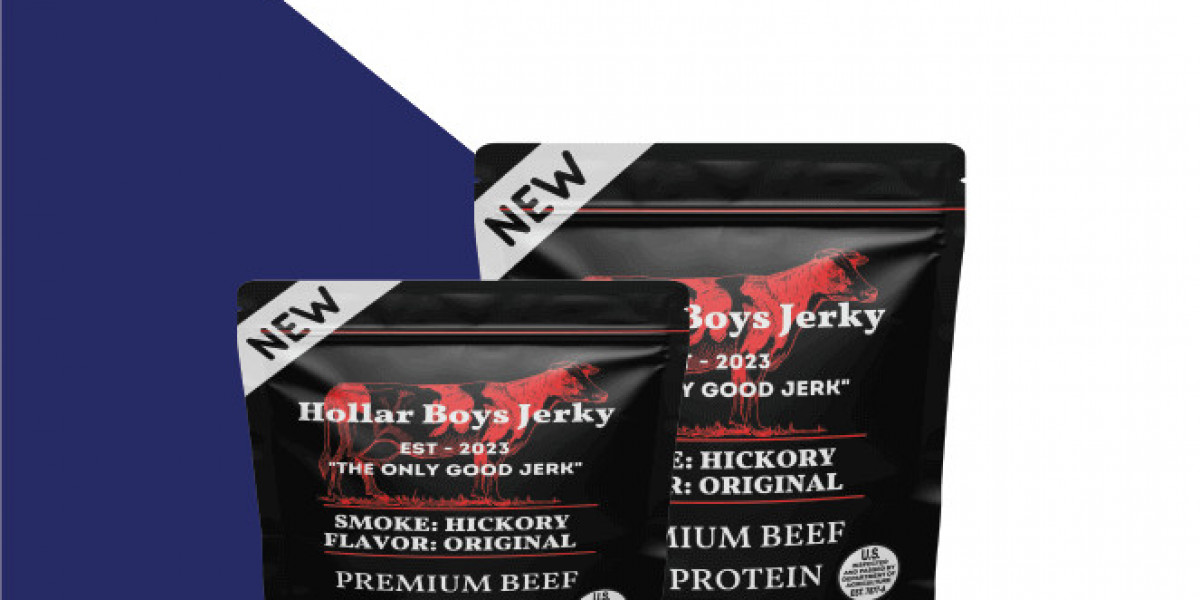

Meat snack producers are increasingly asked by both retailers and shoppers to demonstrate genuine progress toward lower-impact packaging rather than relying on vague environmental claims. A pouch built entirely around convenience, without consideration for what happens after disposal, is now viewed less favourably across an industry facing closer scrutiny. Material sourcing, ink composition, and structural efficiency are all being reconsidered as part of this broader shift. Within this context, Beef Jerky Bags are being redesigned around several practical ideas worth exploring for brands aiming to align packaging with genuine sustainability goals. The sections below outline these ideas in detail.
Reducing Film Thickness Without Losing Strength
Material reduction remains one of the most direct ways to lower a pouch's overall environmental footprint without a complete redesign. Downgauged barrier films are being tested to cut plastic volume while preserving the grease and moisture resistance jerky specifically requires. Advances in laminate engineering continue narrowing the gap between thinner structures and the puncture resistance once only achievable with heavier films. Weight reduction achieved this way also lowers shipping-related emissions across large distribution volumes. This approach requires careful balance, since pushing thickness too far risks compromising the barrier performance jerky depends on.
Switching to Mono-Material Laminate Structures
Multi-layer laminates combining different plastic types have historically posed significant recycling challenges across the flexible packaging category. Mono-material barrier films are being adopted as a direct alternative, using a single recyclable polymer base instead of mixed layers bonded together. This shift simplifies end-of-life processing considerably, since recycling facilities can handle single-material structures far more efficiently than composite laminates. Grease resistance can still be maintained within these newer structures, addressing one of the earlier limitations that slowed adoption. Wider availability of this material continues expanding as demand grows across the snack packaging sector.
Incorporating Recycled Content Into Films
Recycled material content offers another practical avenue for reducing a pouch's reliance on newly produced plastic. Post-consumer recycled resin can be blended into certain film layers, lowering overall virgin plastic use without fully compromising barrier performance. Percentage of recycled content varies depending on the specific protective requirements a jerky product demands. Suppliers continue testing higher recycled content ratios as material science advances in this area. Transparent labelling of recycled content also supports buyers seeking verifiable sustainability claims rather than general marketing statements.
Adopting Water-Based and Soy Ink Formulas
Ink formulation represents a smaller but meaningful piece of the overall sustainability picture within jerky packaging production. Soy-based and water-based inks are steadily replacing older solvent-based formulas across a growing share of print runs. Improvements in pigment technology have narrowed earlier gaps in colour vibrancy that once made these alternatives less appealing for detailed branding. Reduced volatile organic compound emissions during printing also benefit air quality within production facilities themselves. Continued refinement of these formulas appears likely as adoption expands further across the industry.
Minimizing Portion Size Waste Through Design
Portion planning plays a direct role in how much packaging material is ultimately consumed across a full production run. A few formats reflect this focus on minimizing excess material:
Single-serve sachets sized precisely to reduce leftover packaging space
Multipack sleeves replacing individually wrapped smaller units
Careful sizing continues reducing unnecessary material use across both retail and bulk distribution channels alike.
Pursuing Verifiable Sourcing Certifications
Credible sustainability claims increasingly depend on documented certification rather than general statements about responsible sourcing practices. FSC and similarly recognized certifications confirm that paperboard or fiber components within packaging originate from responsibly managed sources. Third-party verification adds accountability that self-reported claims cannot easily replicate on their own. Buyers increasingly request this documentation directly during supplier evaluations rather than accepting general assurances at face value. Reliance on recognized standards continues growing as scrutiny around unsubstantiated environmental claims intensifies.
Exploring Compostable Coating Development
Fully compostable jerky packaging remains an aspiration rather than a widespread commercial reality within current material science. Grease resistance continues presenting a genuine technical hurdle, since many compostable film formulas struggle to match the oil-blocking performance of conventional barrier laminates. Researchers continue experimenting with plant-based coatings offering partial resistance, though consistent performance across varied fat content remains difficult to guarantee. Composting infrastructure availability also limits practical adoption in many regions. Ongoing development suggests meaningful progress is possible even if widespread use remains further off than other sustainability measures.
Piloting Take-Back and Collection Programs
Circular packaging initiatives are beginning to surface within the jerky category as producers look beyond simple recyclability toward closed-loop systems. Pilot programs allow used pouches to be collected and reprocessed rather than discarded through standard waste streams. Collection logistics remain a genuine hurdle, since consumer participation depends heavily on convenient drop-off points or mail-back options. Early results from these pilots suggest genuine interest exists among environmentally conscious consumers willing to participate when given accessible options.
Reducing Adhesive Use in Closure Design
Adhesive content affects recyclability more than many producers initially realize during pouch specification. Excessive bonding agents can complicate recycling processes, particularly when adhesives are incompatible with the base film material. Tuck-style or minimal-adhesive closures are being favoured where possible to reduce this contamination risk. Where adhesive remains necessary, water-soluble formulations are increasingly specified over stronger permanent bonding agents. This reduction supports cleaner recycling outcomes once a pouch reaches the end of its usable life.
Balancing Sustainable Choices Against Budget
Financial considerations remain genuinely relevant even as environmental priorities gain broader importance across jerky packaging decisions. Sustainable materials often carry a modest premium compared to conventional alternatives, particularly at smaller order volumes. Many producers phase in sustainable upgrades gradually rather than overhauling an entire packaging line at once, spreading cost impact across several production cycles. Guidance through this balancing process is often sought through suppliers such as Universal Packaging, where material comparisons and cost estimates support more informed decision-making.
Conclusion
Considered together, these ideas show that meaningful sustainability progress in jerky packaging rarely depends on a single dramatic change but rather a series of deliberate, incremental improvements. Reduced film thickness, mono-material structures, and verified certifications each contribute measurably without requiring a complete packaging overhaul all at once. As these choices are implemented thoughtfully, the reputation of the brand tends to be strengthened among increasingly informed consumers evaluating packaging alongside flavour and price. Ongoing support through this transition, including material samples and cost guidance, remains available through Universal Packaging, helping snack producers adopt sustainable ideas at a pace suited to their budget and production scale.









