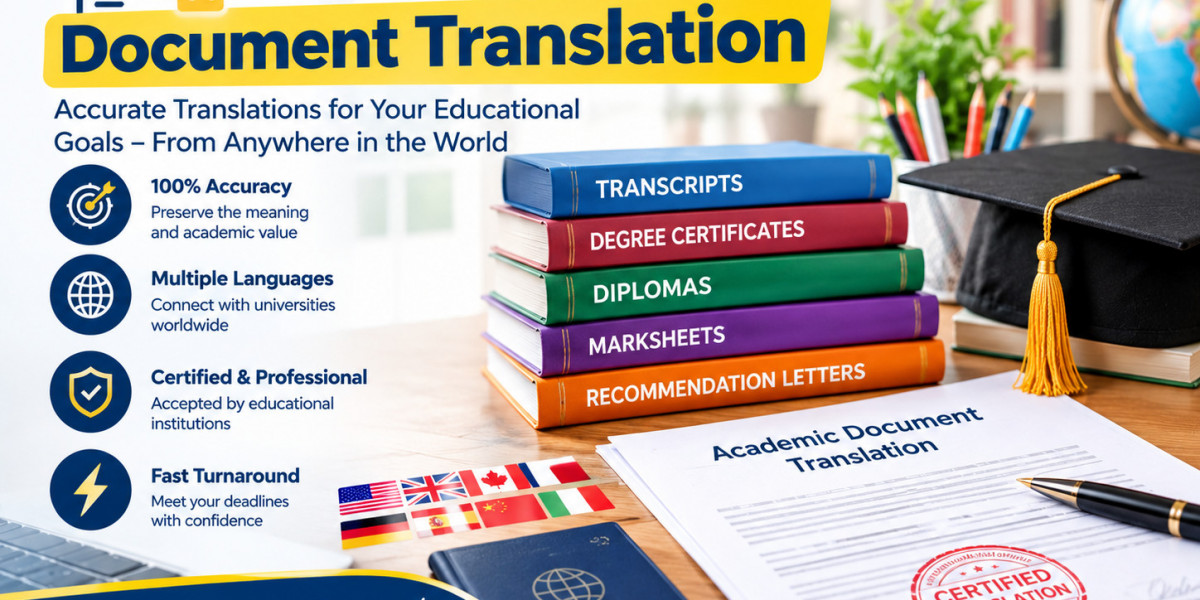

Academic documents can play an important role when students and professionals move between countries. Diplomas, transcripts, certificates, degrees, enrollment letters, and other educational records may be requested by universities, employers, immigration authorities, licensing organizations, or government offices.
When these documents are being used internationally, simply presenting the original document may not always be enough. Depending on the destination country and the purpose of the document, you may need a certified translation, an apostille, authentication, or a combination of these services.
Understanding the process before submitting your educational records can help prevent unnecessary delays. Professional Academic Document Translation can make educational information easier for an institution in another country to understand, while document legalization procedures can help establish the authenticity of the paperwork.
What Is Academic Document Translation?
Academic Document Translation is the process of translating educational records from one language into another while preserving the important information and structure contained in the original document.
Common documents that may require translation include:
- High school diplomas
- College and university diplomas
- Academic transcripts
- Degree certificates
- Graduation certificates
- Enrollment letters
- Student records
- Course descriptions
- Academic certificates
- Training certificates
- Recommendation letters
- School identification documents
The exact translation requirements depend on the organization receiving the documents.
For example, a university may request an official translation of a transcript before evaluating an international student's academic history. An employer may request translated educational credentials when reviewing qualifications from another country.
A professional translator should accurately reproduce names, dates, grades, course titles, institutional information, and other important details without changing their meaning.
Why Academic Documents May Need Translation
Educational systems vary from country to country. A document issued in one language may not be understandable to an institution operating in another.
A translated document allows the receiving organization to review the student's educational information in a language it accepts.
This can be especially important for:
- International university applications
- Graduate school applications
- Professional licensing
- Employment applications
- Immigration procedures
- Credential evaluations
- International education programs
- Scholarship applications
- Professional registration
The receiving institution normally determines whether a translation is required and what type of translation it will accept.
What Is an Apostille?
An apostille is a form of authentication used for certain public documents intended for use in another country that participates in the Hague Apostille Convention.
The apostille confirms the authenticity of the signature, the capacity in which the person signing the document acted, and, where applicable, the identity of the seal or stamp on the document.
It does not verify the factual content of the document itself.
For people using educational documents internationally, understanding this distinction is important. An apostille and a translation serve different purposes.
The apostille relates to authentication, while translation converts the document's content into another language.
Apostille vs. Translation
These two services are often discussed together, but they are not the same thing.
Translation deals with language. It communicates the information contained in a document in another language.
Apostille deals with authentication. It provides a recognized form of certification for qualifying public documents being used internationally.
Depending on the requirements of the receiving organization, you may need one service or both.
For example, a university may request a translated academic transcript, while another authority may require an apostilled educational document.
Before ordering services, it is important to confirm exactly what the receiving organization requires.
Common Academic Documents That May Require Translation
Different educational records can have different translation requirements.
Diplomas
A diploma typically identifies the degree awarded, the institution, the student's name, and the date of graduation.
Transcripts
Transcripts can be more detailed and may include course names, grades, credits, academic terms, and cumulative results.
Because transcripts often contain extensive information, accuracy is particularly important.
Degree Certificates
A degree certificate confirms the qualification awarded by an educational institution. The receiving organization may request a translated version when the original is written in another language.
Enrollment Documents
Students applying to international institutions may need translated proof of enrollment or academic status.
Training Certificates
Professional training and educational certificates may also require translation when being submitted to employers, licensing bodies, or foreign institutions.
Why Accuracy Matters in Academic Translation
Academic records contain information that can directly affect an application or evaluation.
A small mistake in a person's name, date, grade, course title, or degree can create confusion.
Professional translators should carefully review:
- Student names
- Institution names
- Dates
- Academic qualifications
- Course names
- Grades
- Credits
- Signatures and stamps
- Official terminology
- Abbreviations
Formatting may also matter. A translation should make it easy for the receiving organization to identify information and compare it with the original document.
The goal is not simply to translate individual words. The translated document should accurately communicate the meaning and context of the original.
Certified Academic Translation
Some organizations require a certified translation rather than a standard translation.
A certified translation generally includes a translator's certification or statement confirming that the translation is accurate and complete to the best of the translator's knowledge.
However, certification requirements can differ depending on the institution, country, or purpose of the document.
For this reason, applicants should check the exact requirements of the organization receiving the documents before selecting a translation service.
When Do You Need Both Services?
There are situations where an international application may require both document authentication and translation.
For example, a foreign authority might require an academic certificate to be authenticated, while also requiring the information to be provided in the authority's official language.
In such cases, the order of the process can matter.
The appropriate procedure may depend on:
- The country where the document was issued
- The country where it will be used
- The type of document
- Whether the document is eligible for an apostille
- The receiving organization's requirements
- The required translation language
- Whether certification is required
Because requirements vary, applicants should verify the process before submitting original documents.
How the Process Typically Works
Although procedures differ, an international academic-document project may generally involve several steps.
Step 1: Identify the Required Documents
Start by determining exactly which academic records are needed.
Avoid ordering translations for unnecessary documents unless the receiving institution specifically requests them.
Step 2: Confirm the Requirements
Contact the university, employer, government agency, licensing authority, or other organization receiving the documents.
Ask whether they require:
- Translation
- Certified translation
- Apostille
- Authentication
- Notarization
- Original documents
- Copies
- Specific formatting
Step 3: Prepare the Documents
Make sure the documents are complete and readable. Poor-quality scans can make names, grades, stamps, and other information difficult to interpret.
Step 4: Complete Translation
A qualified translator can translate the academic records while preserving the original information and structure.
Step 5: Complete Authentication When Required
If an apostille or other authentication is required, the document should follow the appropriate procedure for the jurisdiction where it was issued.
Step 6: Submit the Documents
Once the translation and authentication requirements have been satisfied, submit the documents according to the receiving organization's instructions.
Common Mistakes to Avoid
International document processes can become complicated when applicants make assumptions.
One common mistake is assuming that every country accepts the same type of certification. Requirements vary significantly.
Another mistake is translating a document without checking whether the receiving organization requires a specific certification format.
Applicants should also avoid changing names, dates, grades, or other information simply to make the document appear more familiar. The translation should accurately reflect the original.
Submitting incomplete documents can also cause delays.
Before starting, create a checklist of everything required by the receiving organization.
Choosing a Professional Translation Provider
When selecting a translation provider, consider experience with educational documents and international submissions.
A professional provider should be able to explain the difference between translation, certification, notarization, and authentication.
Look for a service that provides:
- Experienced translators
- Accurate terminology
- Confidential document handling
- Clear pricing
- Reasonable turnaround expectations
- Document review
- Certification when required
- Support with international document procedures
The Apostille and Translation process can involve multiple requirements, so clear communication is particularly valuable.
A provider should not promise that a particular document will automatically be accepted. Final acceptance is determined by the organization receiving the paperwork.
Protecting Your Personal Information
Academic documents often contain sensitive personal information, including full names, dates of birth, student identification numbers, grades, addresses, and institutional records.
When sending documents for translation or authentication, choose a provider that takes document privacy seriously.
Ask how documents are received, stored, processed, and deleted after completion.
Avoid sending unnecessary personal documents when they are not required for your application.
International Students and Academic Credentials
International students frequently encounter document requirements when applying to schools, colleges, and universities abroad.
A foreign institution may request translated transcripts or diplomas so admissions staff can understand the applicant's educational background.
Some institutions may also request credential evaluations or specific document formats.
Because every institution has its own admission policies, students should review the school's official instructions carefully.
Starting the process early can be helpful because translation, authentication, and institutional review may each take time.
Businesses and Professional Credentials
Academic documents are not only relevant to students.
Professionals applying for jobs, licenses, certifications, or regulated occupations in another country may also need translated educational credentials.
For example, an employer or professional licensing organization may want to verify a person's degree, training, or academic history.
A clear and accurate translation can make the review process easier, provided it meets the receiving organization's requirements.
Final Thoughts
International education and professional opportunities often require careful document preparation. Academic records may need to be translated, certified, authenticated, or apostilled depending on where they were issued and where they will be used.
Professional Academic Document Translation helps communicate educational information clearly across language barriers while preserving the details of the original records.
The Apostille and Translation process should always be based on the specific requirements of the organization receiving your documents. There is no universal procedure that applies to every academic document or every country.
By confirming requirements early, preparing complete documents, and working with experienced professionals, applicants can reduce avoidable errors and make the international document process more organized.
Frequently Asked Questions
1. What academic documents can be translated?
Diplomas, transcripts, degree certificates, enrollment records, training certificates, academic letters, and other educational documents may be translated depending on the requirements of the receiving organization.
2. Is an apostille the same as a translation?
No. A translation converts document content from one language to another, while an apostille is a form of authentication for qualifying documents intended for use internationally.
3. Do all academic documents need an apostille?
No. Requirements depend on the document, issuing jurisdiction, destination country, and organization receiving the document.
4. Do universities accept certified translations?
Many institutions accept certified translations, but requirements vary. Applicants should check the specific university's instructions before ordering a translation.
5. Can a diploma and transcript be translated together?
They can be handled as part of the same translation project, but whether both are required depends on the receiving institution or authority.
6. How accurate should an academic translation be?
Academic translations should accurately reflect the original document, including names, dates, grades, qualifications, course titles, and institutional information.
7. Can academic documents be translated before getting an apostille?
The appropriate order can depend on the document and the requirements of the destination authority. Confirm the required procedure before beginning.
8. How long does academic document translation take?
Turnaround varies according to document length, language pair, formatting, certification requirements, and provider workload.
9. Do I need to provide the original document?
Not necessarily for every translation service. However, the receiving authority may have specific requirements regarding originals, certified copies, or scans.
10. Why should I verify requirements before ordering?
Different universities, government agencies, employers, and foreign authorities can have different rules. Confirming requirements first can help prevent paying for a service that does not meet the recipient's specifications.