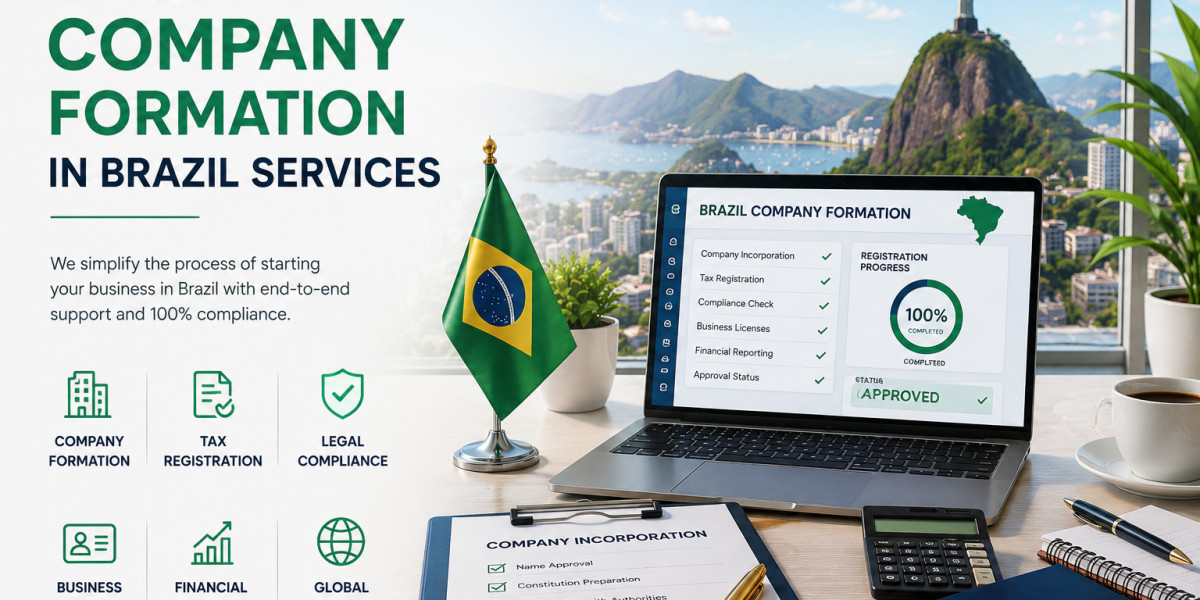

Brazil doesn't need much of an introduction. It's the ninth-largest economy in the world, home to more than 215 million people, and a tech sector producing hundreds of thousands of engineering graduates every year. For foreign entrepreneurs and investors, the appeal is obvious. What's less obvious, at least at first glance, is how to actually get a company registered there without losing weeks or your patience to a system that spans federal, state, and municipal authorities all at once. That's exactly where expert company formation services earn their keep.
Why Foreigners Don't Usually Go It Alone
On paper, Brazilian law is fairly welcoming. Foreign individuals and companies can own 100% of most Brazilian entities, and there's no requirement to bring in a local partner if you use the right structure. In practice, though, Company formation in Brazil process involves apostilled documents, sworn Portuguese translations, a mandatory local legal representative, and coordination across multiple government bodies that don't always move at the same pace. A single incorrect consular seal or a mistranslated address on your Articles of Association can add weeks to your timeline and cost you money in resubmission fees. This is precisely the kind of friction that a good formation service is built to absorb.
Choosing the Right Structure Actually Matters
Most foreign investors end up choosing between two main vehicles: the Sociedade Limitada, or LTDA, and the Sociedade Anônima, or S.A. The LTDA is the workhorse of Brazilian business formation flexible, relatively low-cost, and well suited to small and medium enterprises or service-based businesses. Since 2019, solo entrepreneurs have also had the option of a single-member version, the SLU, which removes the old requirement of needing a second partner just to satisfy paperwork. The S.A., on the other hand, is built for scale. It demands a board, more rigorous governance, and higher formation costs, and it's really only worth the complexity if you're planning to raise capital broadly or eventually go public. A formation specialist's first real value-add is often simply steering clients toward the structure that fits their actual business, rather than the one that sounds most impressive.
What the Process Actually Involves
Once the entity type is settled, the mechanics follow a fairly consistent sequence: drafting the Contrato Social or Estatuto Social, filing it with the state-level Junta Comercial, registering for a CNPJ (the federal tax ID) through the Receita Federal, and for foreign-funded companies registering the capital inflow with the Central Bank so that dividends can eventually be repatriated without complications. Foreign shareholders also need an individual taxpayer number, the CPF, and must issue a notarized power of attorney to their local representative if they're not physically in Brazil.
None of this is impossible to do independently, and Brazil has genuinely modernized parts of it CNPJ issuance, for instance, Company Formation sped up considerably through centralized online portals, and some states now process the bulk of LTDA formations digitally. But the parts that remain manual translations, apostilles, coordinating with banks that often still require in-person verification are exactly where an experienced local team saves the most time.
Realistic Timelines and Costs
Depending on the source and the complexity of the case, most guides put full incorporation, from document gathering to a functioning CNPJ, somewhere between two weeks on the fast end and around three months on the slow end, with total costs typically ranging from a few thousand to over twenty thousand reais depending on the entity type and legal support involved. A formation service won't necessarily make every step instant, but it will usually prevent the avoidable delays missing documents, incorrect filings, licensing steps done out of order that stretch a three-week process into a three-month one.
The Real Value of Getting Expert Help
Brazil rewards preparation and punishes shortcuts. Its tax system is also mid-transition, with a new dual VAT framework phasing in gradually through the early 2030s, which makes the entity and tax choices made today more consequential than they might first appear. A capable formation partner doesn't just file paperwork they help you choose a structure that still makes sense years down the line, keep your documentation clean from day one, and get you from idea to operating company without the detours that catch so many first-time entrants off guard.