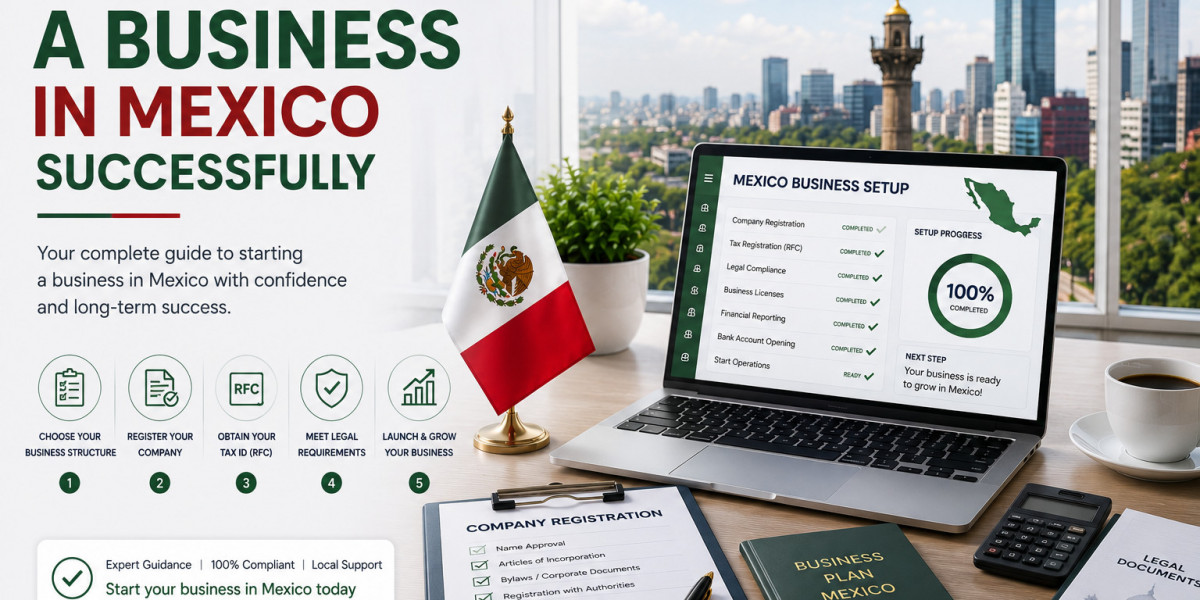

There's a lot of content out there about how to legally register a company in Mexico the notary, the RFC, the bank account. All of that matters, but it's really just the price of admission. Plenty of foreign entrepreneurs get through incorporation cleanly and still struggle once they're actually operating, because success in Mexico depends heavily on things that happen after the paperwork: understanding the market you've entered, building the right local relationships, and staying on top of a compliance environment that doesn't forgive neglect.
Understand Why Mexico, Specifically, Right Now
A lot of the current interest how to start a business in Mexico comes down to one word: nearshoring. Its proximity to the US, its trade agreements, and its manufacturing base have made it an increasingly attractive alternative to more distant supply chains. But that macro story doesn't automatically translate into success for every business. Mexico's regions vary enormously Mexico City's business culture and consumer habits look very different from those in Monterrey or Guadalajara and the country's growth, while positive, has been relatively modest recently. Founders who succeed tend to be the ones who validate demand for their specific product or service in their specific target region, rather than assuming a large national population automatically means a large addressable market.
Choose Your Structure With the Long Game in Mind
Most foreign investors default to the S.A. de C.V., and it's a sensible default minimal capital requirements, no nationality restrictions, and flexibility for almost any business size. But it's worth pausing on this decision rather than rushing through it. If you're planning to bring on investors or scale quickly, the SAPI structure offers governance flexibility that institutional investors tend to prefer, including customizable share classes. If you're a solo founder running a smaller tech venture, the simplified S.A.S. structure can get you moving faster, though its revenue cap means you'll eventually need to transition to something larger. The businesses that navigate this well tend to think a year or two ahead rather than optimizing purely for the fastest possible launch.
Respect the Sequence, and the Bottlenecks
Mexican incorporation runs through a fairly fixed sequence: name authorization, notarized incorporation deed, registration with the Public Registry of Commerce, then the SAT tax registration. Founders who succeed here are the ones who plan around the known slow points rather than being surprised by them. Getting your RFC and e.firma requires an in-person appointment that can be booked out for weeks, and opening a corporate bank account often the single longest step comply globally in the entire process can take a month or two on its own due to strict KYC checks on foreign-owned entities. Building slack into your launch timeline for these specific steps, instead of assuming everything will move at a predictable pace, prevents a lot of unnecessary stress.
Build Local Support Before You Need It
Almost every founder who's done this successfully will tell you the same thing: get a good accountant and legal representative involved early, not after something breaks. Mexico's tax system has become notably stricter recently a 2026 reform tightened requirements around electronic invoicing, and non-compliance now carries real financial penalties. Businesses with foreign ownership also have a hard deadline to register with the National Registry of Foreign Investment, and missing it results in fines. None of this is the kind of thing you want to be learning about for the first time after the fact. A capable local team turns these into routine, manageable tasks instead of periodic crises.
Treat Compliance as a Habit, Not a Hurdle
Getting your bank account activated can feel like crossing the finish line, but it's really just where the ongoing work begins. Monthly tax filings, invoicing rules, and reporting obligations continue indefinitely, and Mexico's regulatory environment has been tightening rather than loosening. The businesses that genuinely thrive here tend to treat compliance as a routine part of operating, not a one-time obstacle to clear. Combined with realistic regional market research and a structure chosen for where the business is heading rather than just where it's starting, that mindset is usually what separates companies that merely get registered from the ones that actually build something lasting in Mexico.