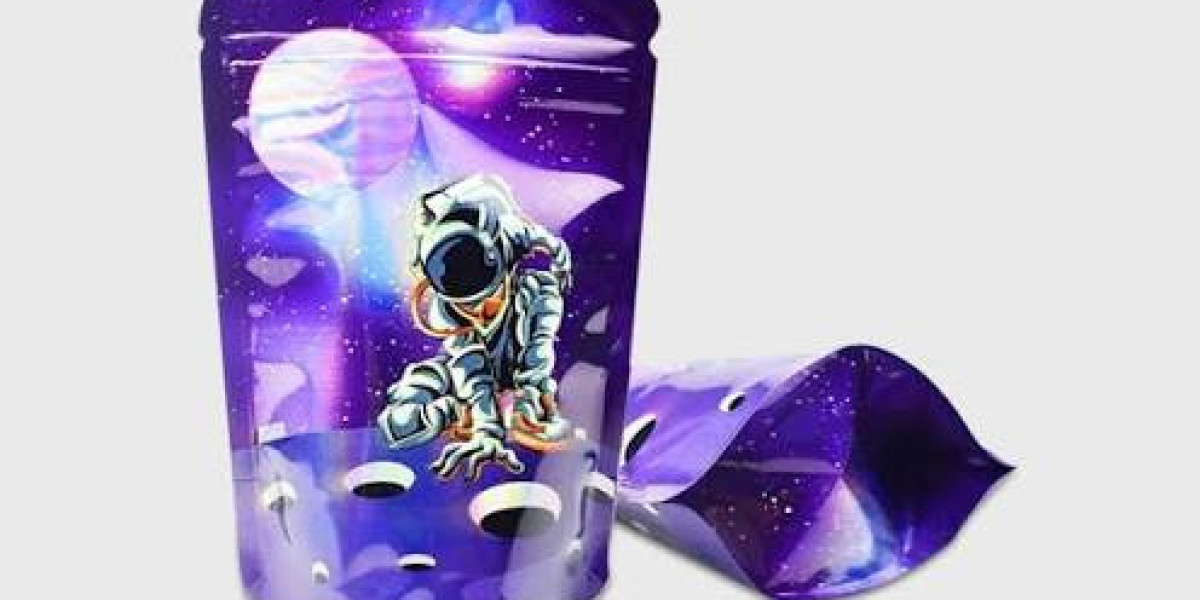

Custom holographic mylar bags combine product protection with a distinctive visual appearance. Their reflective, multi-color surface can help packaging stand out while providing a practical format for products that need a durable barrier against moisture, light, air, and other environmental factors.
These bags are commonly considered for retail products, promotional items, specialty goods, food products, and other packaged products where presentation matters. With custom printing, businesses can add their logo, product information, colors, graphics, and other branding elements to create packaging that matches their identity.
What Are Custom Holographic Mylar Bags?
Holographic mylar bags are flexible packaging bags made with layered barrier materials and a reflective holographic finish. Depending on the construction, the surface can create changing colors or patterns when viewed from different angles.
The holographic appearance gives brands an alternative to traditional plain foil or printed bags. Instead of relying only on graphics to attract attention, the reflective surface itself becomes part of the packaging design.
Custom versions can be produced in different sizes and formats depending on the product being packaged. Businesses can also select different closure options, printing styles, and finishing details.
Why Choose Holographic Packaging?
Packaging has to compete for attention in retail environments and online product photography. A holographic surface can create a noticeable visual effect that helps products look different from standard packaging.
Some benefits include:
- Eye-catching reflective appearance
- Space for custom branding and graphics
- Barrier properties suitable for many packaged products
- Multiple size and format options
- Professional presentation for retail products
- Flexible packaging that is convenient to store and transport
The actual barrier performance depends on the bag's material construction and specifications, so businesses should select a structure appropriate for the product.
Custom Sizes for Different Products
One of the main advantages of custom mylar bags is the ability to select dimensions based on the product. Instead of forcing a product into an oversized or undersized standard pouch, businesses can plan packaging around its actual volume and shape.
Small bags can be suitable for compact products, samples, or individual portions. Medium and larger bags can accommodate products that require additional capacity.
When determining the size, businesses should consider the product dimensions, filling volume, sealing area, closure mechanism, and amount of headspace required.
Accurate measurements are particularly important when packaging is designed for automated or high-volume filling processes.
Popular Mylar Bag Styles
Custom holographic mylar bags can be produced in several formats depending on the packaging requirements.
Flat pouches: These offer a simple structure and can be useful for lightweight products and smaller quantities.
Stand-up pouches: A bottom gusset allows the bag to stand upright, making this style suitable for retail displays.
Three-side seal bags: These bags are sealed along three edges and can be filled from the remaining opening before final sealing.
Zipper pouches: A resealable zipper can make the package convenient for products that are used over multiple occasions.
Heat-seal bags: These can provide a secure closure when properly sealed with compatible equipment.
The appropriate style depends on product characteristics, filling methods, storage requirements, and the desired retail presentation.
Holographic Printing and Branding
The holographic surface creates a strong visual foundation, but custom printing allows businesses to add recognizable branding. A logo, product name, illustrations, typography, and product details can all be incorporated into the artwork.
Because the bag already has a reflective appearance, the artwork should be planned carefully. Too many design elements can make important information difficult to read.
A simple logo combined with clear typography and controlled use of color can create an organized appearance. For products with several variants, consistent branding can be combined with different colors or product names to distinguish each version.
Before production, businesses should review how artwork interacts with the holographic surface and confirm the expected appearance through an approved proof.
Materials and Barrier Properties
Mylar packaging is generally associated with polyester-based film structures, often combined with other layers to provide specific barrier characteristics. The exact structure can vary according to the intended application.
Different products may require different levels of protection against moisture, oxygen, light, or aroma transfer. Businesses should therefore discuss the appropriate material construction with their packaging supplier instead of assuming every mylar bag has identical performance.
For products that are sensitive to environmental exposure, barrier specifications can be an important part of packaging selection.
Closure Options
The closure is another important part of flexible packaging. Different products and usage patterns may require different sealing methods.
Zipper closures can allow customers to repeatedly open and close a pouch. Heat sealing can provide a more permanent closure and may be suitable for products that are packaged for single use.
Some packaging designs combine a zipper with a heat seal above the zipper. This can provide a resealable feature while also allowing the package to be sealed during production.
Businesses should consider whether the packaging will be opened once or repeatedly and select the closure accordingly.
Custom Holographic Mylar Bags for Retail
Retail packaging needs to balance visual appeal with practical product information. A holographic bag can attract attention, while custom printing provides space for the details customers need.
Depending on the product and applicable requirements, packaging may include:
- Brand name and logo
- Product name
- Product variant or flavor
- Net quantity
- Ingredients or material information
- Directions or usage information
- Manufacturer or distributor details
- Barcode
- Required warnings and regulatory information
The exact labeling requirements depend on the type of product and the market where it is sold. Businesses should verify applicable requirements before finalizing packaging artwork.
Packaging for E-Commerce
Holographic mylar bags can also work well for e-commerce products because flexible pouches generally require less storage space than rigid packaging.
Their lightweight construction can be useful when products are packed into shipping cartons or mailers. However, the pouch itself may not replace the need for external shipping protection.
Businesses should consider the complete shipping setup, including outer packaging, cushioning, sealing, and product handling. Testing the finished package before large-scale production can help identify potential problems.
Wholesale Custom Holographic Mylar Bags
Wholesale packaging is useful for businesses that need consistent bags across larger product quantities. Ordering multiple bags with the same brand design can help maintain a uniform appearance across inventory.
Businesses with several product variations can create a consistent packaging template while changing the product name, flavor, size, or other relevant information.
Before placing a bulk order, it is helpful to confirm:
- Bag dimensions
- Material structure
- Holographic finish
- Printing specifications
- Closure type
- Order quantity
- Artwork requirements
- Filling and sealing method
Checking these details in advance can help reduce production errors and improve consistency.
How to Design Effective Holographic Mylar Packaging
A strong design should work with the holographic finish rather than competing against it. Start with a clear visual hierarchy so customers can quickly identify the brand and product.
Place the logo where it is easy to recognize. Keep product names readable and use typography that remains clear against the reflective background.
For multiple product varieties, maintain the same basic layout while using controlled visual differences between products. This creates a recognizable product family without making every package look identical.
It is also important to leave enough space for required information. Attractive artwork should never make essential text difficult to read.
Sustainability Considerations
Flexible packaging can reduce packaging volume compared with some rigid formats, but the environmental characteristics of a bag depend heavily on its material structure and local recycling systems.
Multilayer barrier packaging may be difficult to recycle in some locations. Businesses interested in more sustainable options should discuss available material structures with their packaging supplier and verify the claims they intend to make.
Using appropriately sized packaging can also help avoid unnecessary material. The goal should be to select a package that provides the required product protection without excessive construction.
Final Thoughts
Custom holographic mylar bags offer businesses a combination of visual impact, flexible packaging, and customizable branding. Their reflective appearance can help products attract attention, while custom printing allows brands to communicate product information and maintain a consistent identity.
From stand-up pouches and zipper bags to custom flat formats, businesses can select a structure based on their product and packaging requirements. Careful attention to dimensions, material construction, closure type, printing, and labeling can help create packaging that is both attractive and practical.








