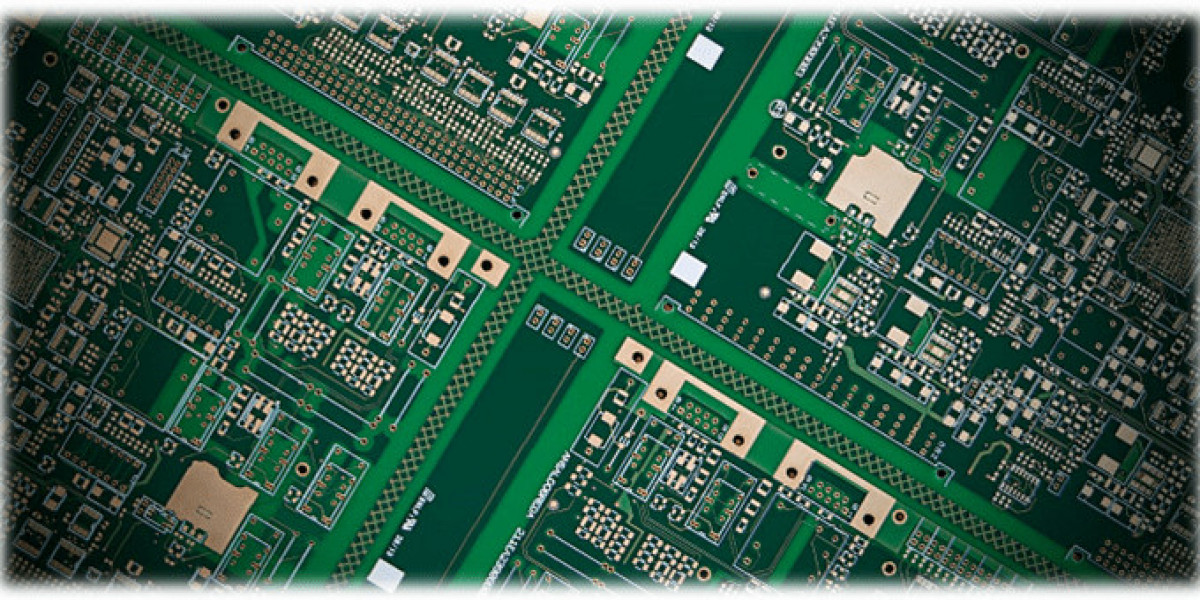

The medical electronics industry is evolving rapidly, with innovations in wearable health monitors, portable diagnostic equipment, advanced imaging systems, and connected medical devices transforming modern healthcare. These technologies require electronic components that are compact, efficient, accurate, and reliable. At the heart of many of these innovations is the printed circuit board (PCB), which connects and supports the electronic components responsible for essential device functions.
High-Density Interconnect (HDI) technology is becoming increasingly valuable for medical electronics because it allows engineers to integrate more circuitry into smaller spaces. Through fine-line routing, microvias, and advanced multilayer structures, HDI boards help designers meet the growing demands of next-generation healthcare technology.
For manufacturers developing advanced medical products, selecting the right HDI Printed Circuit Board is an important step toward achieving compact designs, dependable electrical performance, and efficient product development. Pcb-Togo Electronic, Inc. supports electronics innovation by providing PCB fabrication solutions for applications that demand precision and advanced circuit board construction.
What Makes HDI Printed Circuit Boards Important for Medical Electronics?
HDI printed circuit boards are designed to accommodate high component density and complex electrical connections within a relatively small footprint. Unlike conventional PCB structures, HDI technology uses features such as laser-drilled microvias, fine traces, blind vias, and buried vias to optimize routing space and support sophisticated component layouts.
These features are particularly useful in medical electronics, where engineers often need to integrate sensors, processors, communication modules, and power management circuits into compact devices.
For example, wearable health monitors must capture physiological data while remaining lightweight and comfortable. Portable diagnostic instruments need sufficient processing capability without becoming bulky. Advanced imaging equipment requires carefully designed circuitry to manage complex signals and data processing.
Supporting Smaller and More Portable Medical Devices
Miniaturization is one of the most significant trends in modern healthcare technology. Medical devices are becoming smaller, lighter, and easier to carry, allowing patients and healthcare professionals to access monitoring and diagnostic capabilities in more settings.
Wearable ECG monitors, portable ultrasound equipment, compact hearing devices, and connected health sensors all benefit from efficient circuit board layouts.
An HDI PCB can accommodate fine-pitch components and complex electrical connections within limited board space. Microvias help connect different circuit layers without requiring the larger routing areas associated with some conventional via structures.
This design flexibility enables manufacturers to develop smaller electronic assemblies while retaining the functionality required by modern medical applications.
However, miniaturization must be carefully balanced with thermal management, component placement, electrical spacing, and manufacturing capability. A smaller board is only beneficial when its design remains practical to manufacture and validate.
Improving Signal Integrity and Measurement Accuracy
Medical electronics frequently process sensitive signals that must be captured and interpreted accurately. Devices such as patient monitors, diagnostic instruments, and medical imaging systems depend on electronic circuits that can preserve signal quality throughout acquisition and processing.
Poor PCB layout can introduce unwanted noise, electromagnetic interference, crosstalk, or signal distortion. These issues may affect system performance, particularly when sensitive analog circuits operate alongside high-speed digital components.
HDI technology gives designers additional control over routing paths, layer arrangements, and component placement. Shorter interconnections can help reduce parasitic inductance and capacitance, while carefully designed reference planes and controlled-impedance routing can support high-speed signal transmission.
Nevertheless, HDI construction alone does not guarantee better signal integrity. The final result depends on the complete electrical design, material properties, stack-up configuration, grounding strategy, and manufacturing consistency.
For medical equipment that combines precision sensing with digital processing, these design considerations are essential to developing dependable electronic systems.
Enabling Advanced Wearable and Connected Healthcare Technology
Wearable medical technology is expanding the possibilities for continuous monitoring and remote patient care. Devices can incorporate sensors, wireless communication, processors, and battery management systems to collect and transmit health-related information.
Integrating these functions into a small enclosure presents a considerable engineering challenge. Each additional component requires electrical connections, while the board must still accommodate power distribution, antenna placement, and thermal requirements.
HDI printed circuit boards help address these challenges by providing higher routing density and flexible multilayer design options.
For manufacturers developing connected healthcare products, HDI technology can support compact layouts that combine sensing, data processing, and communication functions. It can also help designers manage complex connections between fine-pitch components.
The appropriate PCB architecture depends on the product's size, operating environment, expected service life, and electrical requirements. Engineers should evaluate these factors before deciding whether an HDI structure is the most suitable option.
Strengthening Reliability Through Careful PCB Design
Reliability is a fundamental consideration in medical electronics. A circuit board must operate consistently under its intended conditions, whether it is used in a portable diagnostic instrument, a hospital monitoring system, or a wearable medical device.
HDI boards can support compact and highly integrated designs, but their fine features also require careful manufacturing control. Microvia integrity, copper plating, layer registration, dielectric properties, and lamination quality can all influence long-term performance.
Selecting suitable materials is equally important. Engineers should consider thermal stability, moisture resistance, electrical characteristics, and compatibility with the device's intended operating environment.
Manufacturers should also establish appropriate inspection and testing procedures based on the product's technical specifications and risk profile.
For medical products, PCB manufacturing quality should form part of the broader device quality and validation process. An HDI board does not automatically make a medical device compliant or guarantee patient safety; the complete device must meet the applicable requirements.
Businesses seeking dependable manufacturing support can explore PCB Fabrication Taiwan partner for advanced and precision PCB manufacturing to learn more about Pcb-Togo Electronic, Inc. and its PCB fabrication services.
Preparing Medical Electronics for Future Innovation
Next-generation healthcare products will continue to demand smaller circuit boards, greater integration, faster data processing, and dependable electrical performance.
Emerging applications may include advanced diagnostic sensors, connected monitoring systems, compact imaging modules, and increasingly sophisticated wearable devices. These products will place greater emphasis on PCB architecture, signal integrity, manufacturing precision, and material selection.
HDI technology provides an important design option for addressing these demands. However, successful implementation requires collaboration among electrical engineers, mechanical designers, quality teams, and PCB manufacturers.
Designers should define performance requirements early, evaluate the benefits of HDI against its manufacturing complexity, and verify that the selected board construction is appropriate for the final application.
By combining thoughtful engineering with capable fabrication processes, medical electronics manufacturers can create compact, functional products designed to support the changing needs of modern healthcare.
Conclusion
HDI printed circuit boards are helping advance medical electronics by enabling compact layouts, supporting complex signal routing, and integrating more electronic functions into limited spaces. These advantages make HDI technology valuable for wearable monitors, portable diagnostic instruments, connected healthcare products, and other sophisticated medical applications.
However, successful medical PCB development requires more than high circuit density. Material selection, signal integrity, manufacturing precision, reliability testing, and application-specific quality requirements must all be considered.
Pcb-Togo Electronic, Inc. can be a resource for businesses exploring PCB fabrication solutions for advanced electronics projects. By evaluating technical requirements carefully and selecting an appropriate manufacturing partner, product developers can establish a stronger foundation for their next-generation medical electronics.
Start Your PCB Project
If your business is developing compact medical electronics and needs PCB fabrication support, Contact Us to discuss your project requirements and explore suitable manufacturing options.
Frequently Asked Questions (FAQs)
What is an HDI printed circuit board?
An HDI printed circuit board is a PCB designed with high-density interconnections, fine traces, and features such as microvias, blind vias, and buried vias. These structures allow more complex electrical connections within a compact board layout.
Why are HDI PCBs useful for medical electronics?
HDI PCBs help medical device designers integrate sensors, processors, communication components, and other electronic functions into smaller spaces. They can also support carefully engineered signal routing and multilayer circuit architectures.
Which medical devices can use HDI printed circuit boards?
Potential applications include wearable health monitors, portable diagnostic instruments, medical imaging equipment, connected patient monitoring systems, and compact healthcare electronics. The suitability of HDI depends on the requirements of the individual device.
Do HDI PCBs improve signal integrity?
HDI construction can support shorter signal paths and more controlled routing arrangements. However, signal integrity also depends on stack-up design, impedance control, grounding, material properties, and manufacturing consistency.
What should manufacturers consider when selecting an HDI PCB supplier?
Manufacturers should evaluate HDI fabrication capabilities, material options, dimensional tolerances, process controls, inspection procedures, documentation, and the supplier's ability to meet project-specific technical requirements.








