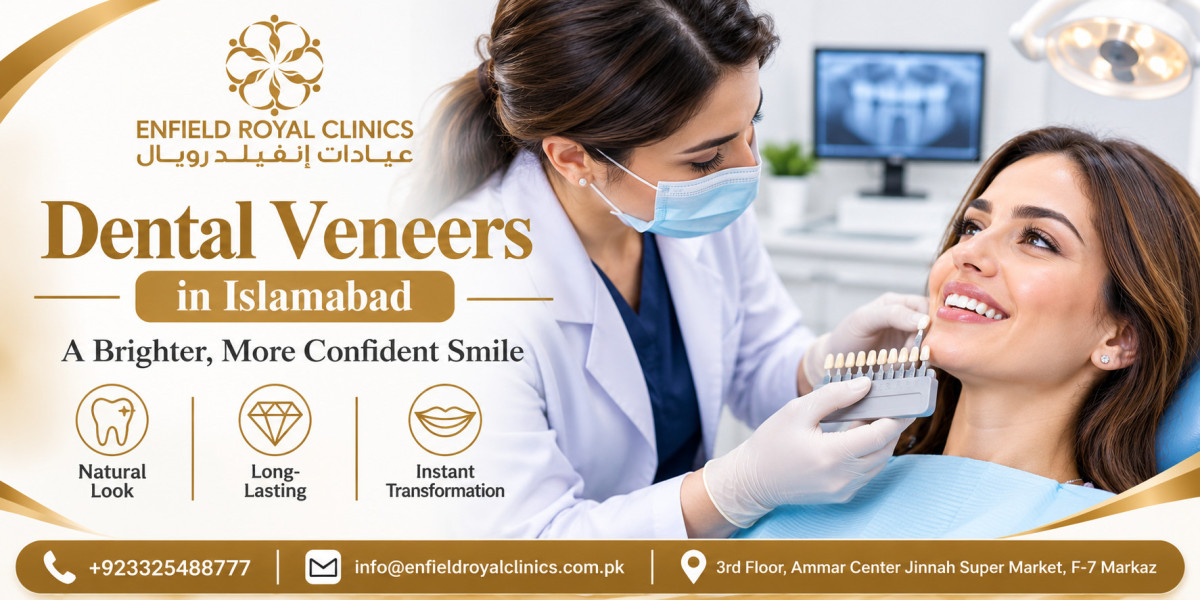

Dental veneers are a popular cosmetic dental option for people who want to improve the appearance of their teeth and achieve a more balanced smile. They are thin, custom-made coverings placed over the front surfaces of teeth to improve concerns such as discolouration, small gaps, chipped edges, uneven shapes, and minor cosmetic imperfections. Different types of veneers are available, and each option offers its own benefits, appearance, durability, and treatment requirements.
For individuals considering Dental Veneers in Islamabad, understanding the available materials and designs can make the decision easier. The most suitable type depends on tooth condition, smile goals, oral health, budget, and the amount of natural tooth structure that needs to be preserved. A dental assessment helps determine which option can provide a comfortable and natural-looking result.
1. Porcelain Dental Veneers
Porcelain veneers are among the most widely used options in cosmetic dentistry. They are made from strong, tooth-coloured ceramic materials and are designed to resemble the appearance of natural enamel. Their light-reflecting qualities help create a realistic finish, making them suitable for patients who want to improve the overall appearance of their smiles.
One of the main advantages of porcelain veneers is their resistance to staining. Unlike natural enamel, which can become discoloured over time, porcelain generally maintains its colour when properly cared for. This makes it a suitable option for people with persistent stains that do not respond well to professional teeth whitening.
Porcelain veneers can also improve the appearance of chipped teeth, uneven edges, small gaps, and irregular tooth shapes. They are individually designed to match the patient's facial features, tooth proportions, and preferred smile appearance.
With good oral hygiene and regular dental visits, porcelain veneers may last approximately 10–15 years or longer. However, their lifespan depends on factors such as oral habits, material quality, placement, and maintenance. Traditional porcelain veneer treatment usually requires some enamel removal, making the procedure generally irreversible.
2. Composite Resin Veneers
Composite veneers are created using tooth-coloured resin material. The dentist applies and shapes the resin directly onto the tooth surface or uses a laboratory-made composite restoration, depending on the treatment approach.
This option can be suitable for people who want to correct minor cosmetic imperfections without choosing porcelain. Composite resin can improve small chips, slight gaps, uneven edges, and some forms of tooth discolouration.
A major benefit of direct composite veneers is that treatment can sometimes be completed in a single appointment. They may also require less tooth preparation than traditional porcelain veneers, although the amount of preparation depends on the individual case.
However, composite material is generally more likely to stain, chip, or wear than porcelain. Its lifespan is often around 5–7 years, but it can vary depending on the patient's habits and dental care. Repairs may be possible if a small area becomes damaged.
Composite veneers can be a practical option for patients seeking a less extensive cosmetic change, but a dentist should explain their maintenance needs and expected durability before treatment.
3. No-Prep and Minimal-Prep Veneers
No-prep and minimal-prep veneers are designed to reduce or limit the amount of natural tooth structure removed before placement. They are often discussed by patients who want to preserve as much enamel as possible.
No-prep veneers may be placed with little or no enamel removal in carefully selected cases. Minimal-prep veneers involve a small amount of reshaping to create enough space for the restoration and achieve a suitable fit.
These options may work well for teeth that are naturally small, slightly worn, or positioned in a way that allows additional material without making the smile look bulky. However, they are not appropriate for everyone.
For example, placing veneers over teeth that already have sufficient thickness or prominent positioning can make them appear overly large. In some situations, traditional preparation may provide a more natural shape and better fit.
A dental examination is important because preserving enamel should not come at the expense of appearance, comfort, or proper bite function.
4. Lumineers and Ultra-Thin Veneers
Lumineers are a branded type of ultra-thin porcelain veneer. They are designed to be thinner than many traditional porcelain veneers and may require little or no tooth preparation in suitable cases.
Their thin structure can make them appealing to patients who want to improve their smiles while limiting changes to their natural teeth. They may be considered for selected cases involving mild discolouration, small gaps, or minor shape concerns.
However, ultra-thin veneers are not automatically the best choice. Their suitability depends on the natural position, colour, size, and condition of the teeth. For example, very dark underlying discolouration may be difficult to conceal with an extremely thin restoration.
Patients should also understand that a thin veneer can still require some preparation depending on the desired result. A dentist can assess whether this option will provide sufficient coverage and a balanced appearance.
5. Palatal Veneers
Palatal veneers are different from conventional veneers because they are placed on the inner surfaces of the upper front teeth rather than the visible front surfaces.
They are commonly considered for patients who have experienced wear or damage to the backs of their upper front teeth. This may occur because of teeth grinding, acid erosion, or other forms of enamel loss.
The purpose of palatal veneers is mainly to restore the affected tooth surfaces and help improve their function. Depending on the condition of the teeth, the restoration may be made from porcelain, composite resin, or another suitable dental material.
Unlike cosmetic veneers that primarily focus on smile appearance, palatal veneers can have a restorative role. The dentist needs to examine the bite and the remaining tooth structure to decide whether this treatment is appropriate.
6. Which Type of Dental Veneer Is Best for Different Needs?
There is no single veneer type that is ideal for every patient. The right option depends on the specific dental concern and the condition of the natural teeth.
For persistent stains: Porcelain veneers may be considered when whitening cannot achieve the desired colour.
For minor chips: Composite or porcelain veneers may help restore the visible shape of the tooth.
For small gaps: Selected porcelain, composite, or ultra-thin veneers may improve the appearance of spacing.
For minimal tooth preparation: No-prep or minimal-prep options may be suitable for carefully selected teeth.
For worn inner tooth surfaces: Palatal veneers may help restore damaged areas.
For a natural-looking smile: Material selection, shade matching, tooth proportions, and careful design are all important.
Before choosing Dental Veneers in Islamabad, patients should discuss their expectations and any existing dental problems with a qualified dental professional. Active tooth decay, gum disease, severe bite issues, or significant tooth damage may need treatment before veneers can be considered.
7. How to Maintain Dental Veneers After Treatment
Proper aftercare plays an important role in protecting veneers and supporting long-term oral health. Although porcelain is relatively resistant to stains, the natural teeth and surrounding gum tissues still require regular attention.
Patients should brush twice daily using a soft-bristled toothbrush and fluoride toothpaste. Daily flossing helps remove food particles and plaque from between the teeth and around the veneer margins. Regular dental check-ups allow the dentist to monitor the condition of the veneers and identify any problems early.
Certain habits can increase the risk of damage. Biting hard objects, chewing ice, opening packaging with the teeth, or biting fingernails should be avoided. Patients who grind or clench their teeth may benefit from a professionally recommended night guard.
It is also important to remember that veneers do not protect the entire tooth from decay or gum disease. Good oral hygiene remains essential, and any new sensitivity, looseness, damage, or discomfort should be checked by a dentist.
Frequently Asked Questions
1. What is the most common type of dental veneer?
Porcelain veneers are among the most commonly chosen options because they provide a natural appearance, resist staining, and offer good durability when properly maintained.
2. Are composite veneers better than porcelain veneers?
Neither option is better for every patient. Composite veneers may require less preparation and can sometimes be completed in one visit, while porcelain veneers generally offer greater stain resistance and durability.
3. Do all dental veneers require tooth shaving?
No. Some patients may qualify for no-prep or minimal-prep veneers. However, traditional porcelain veneers usually require some enamel removal to achieve a suitable fit and natural appearance.
4. How long do dental veneers last?
Porcelain veneers may last around 10–15 years or longer, while composite veneers often last around 5–7 years. Their lifespan depends on oral hygiene, dental habits, placement, and regular maintenance.
5. Can veneers fix crooked teeth?
Veneers can improve the appearance of minor alignment irregularities, but they do not move teeth. Significant crowding or bite problems may require orthodontic treatment instead.
6. Can dental veneers become stained?
Porcelain veneers are generally highly stain-resistant, while composite veneers are more likely to develop discolouration over time. Regular cleaning and avoiding excessive staining habits can help maintain their appearance.
Conclusion
Several types of dental veneers are available, including porcelain, composite, no-prep, ultra-thin, and palatal veneers. Each serves different cosmetic or restorative needs, so the best option depends on tooth condition, treatment goals, and the amount of preparation required. Patients considering Dental Veneers in Islamabad should seek a professional assessment to understand the benefits, limitations, and long-term care requirements of each type. A carefully selected treatment can improve smile appearance while supporting comfort and oral health.





