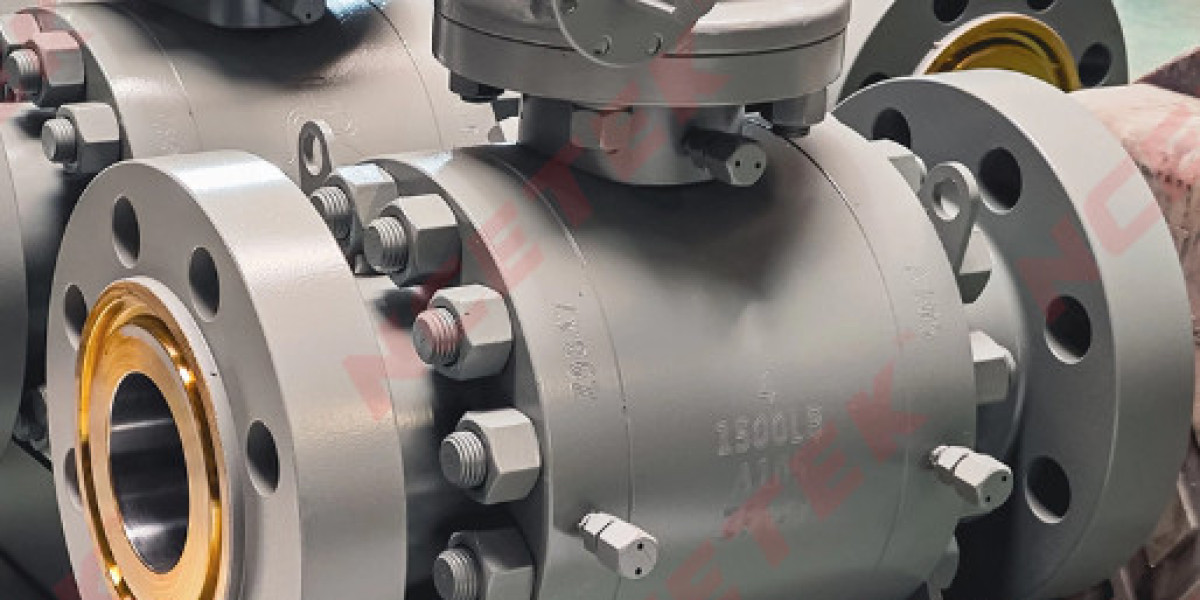

Industrial pipeline systems rely on properly engineered valves to regulate fluid movement, isolate equipment, and support safe maintenance operations. A Ball Valve Factory needs to coordinate product design, material selection, machining, assembly, and inspection to manufacture equipment suitable for different pressure, temperature, and fluid conditions. For international buyers, understanding these manufacturing processes provides a practical foundation for evaluating suppliers and selecting products for specific industrial projects.
Ball valves operate through a spherical closure element containing a central flow passage. When the passage aligns with the pipeline, fluid can move through the valve. A quarter-turn rotation positions the solid section of the ball across the flow path, stopping the flow. This operating principle provides a relatively simple mechanism for pipeline isolation and makes ball valves suitable for many industrial applications.
However, not all ball valves share the same internal structure. Floating ball valves use pipeline pressure to move the ball toward the downstream seat, while trunnion-mounted designs support the ball mechanically through dedicated upper and lower support structures. Other variations include metal-seated, cryogenic, fully welded, and specialized insulated configurations. Each structure has different engineering considerations, so product selection should begin with the actual operating requirements.
Material selection is one of the first stages of manufacturing. Carbon steel is commonly considered for general industrial services where its mechanical and chemical properties are suitable. Stainless steel may be selected for applications requiring additional corrosion resistance, while alloy steel and other specialized materials can be considered for particular pressure and temperature conditions. The final selection should account for the transported medium, operating environment, and applicable material specifications.
The valve body is the main pressure-containing component. Depending on the design, it may be produced through casting or forging. Cast bodies can accommodate complex geometries and integrated structural features. Forged bodies may be preferred for particular mechanical and material requirements. Neither manufacturing method is universally superior; the appropriate choice depends on the design, material grade, dimensions, production process, and project specifications.
Machining accuracy is essential to the final product. Internal body surfaces, seat pockets, stem openings, and connection interfaces must meet the dimensions specified in engineering drawings. The ball also requires suitable spherical geometry and surface finishing to establish consistent contact with the sealing components. Manufacturing deviations can affect assembly accuracy, operating torque, and sealing performance.
Sealing technology is another major consideration. Soft-seated ball valves commonly use polymeric materials such as PTFE or reinforced alternatives, selected according to temperature, pressure, and chemical compatibility. Metal-seated designs use engineered metallic contact surfaces and may be considered for certain high-temperature or abrasive services. Seat materials should always be evaluated against actual operating conditions rather than selected solely by general product category.
The stem assembly transfers operating movement from the handle, gearbox, or actuator to the ball. Its dimensions, material properties, surface finish, and connection with the ball influence mechanical operation. Appropriate stem sealing arrangements are also necessary to limit external leakage. Depending on the product design, additional safety features may be incorporated to address stem retention and pressure containment.
Manufacturing quality depends on consistent control across different production stages. Incoming material inspection helps verify that the supplied materials correspond to purchasing specifications. During machining, dimensional checks help confirm that critical components meet approved drawings. Assembly inspections can identify incorrect component positioning, interference, or unsuitable clearances before final testing.
Finished valves may undergo shell pressure testing, seat leakage testing, and operational checks according to the applicable standards and customer requirements. For specialized products, additional procedures may be necessary. Cryogenic valves, for example, may require low-temperature evaluation, while particular severe-service configurations may involve supplementary inspection. Test requirements should be clearly defined before production.
International industrial projects may reference API, ASME, and other applicable standards. These standards can address valve design, dimensions, pressure testing, materials, and inspection. However, the relevant requirements depend on the specific product configuration. Buyers should verify the applicable standard, edition, and supplementary project requirements rather than assume that every valve follows identical specifications.
Application conditions influence the final manufacturing and purchasing decisions. Petroleum transportation systems may prioritize pressure containment and reliable isolation. Chemical processing facilities require careful consideration of corrosion resistance and sealing compatibility. Power generation systems may involve elevated temperatures and changing operating conditions. Municipal infrastructure projects may place greater emphasis on maintenance accessibility and compatibility with existing pipelines.
Supplier evaluation should extend beyond product appearance and quoted price. Buyers should review engineering drawings, material documentation, inspection procedures, manufacturing consistency, and communication during technical clarification. Clear documentation helps reduce misunderstandings involving connection dimensions, operating mechanisms, pressure classes, and project-specific configurations.
Zhejiang Naishi Valve Co., Ltd. operates under the NCETEK and Naishi Valve brands, providing industrial valve products for different pipeline and process applications. When evaluating a Ball Valve Factory, international buyers should consider the relationship between product structure, material quality, manufacturing accuracy, and testing arrangements. For further information about industrial valve products and available configurations, visit https://www.ncevalve.com/product/.





